Quotessence
Home / Quotes / Quote by George Orwell

Quote by George Orwell

Work

Burmese Days

This novel delves into the social and political landscape of colonial Burma, examining the impact of British rule on the local population and the complex dynamics of race and power. more
Author

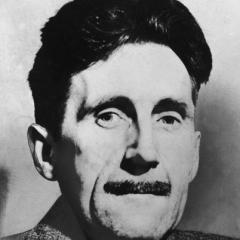
George Orwell
George Orwell

George Orwell, born Eric Arthur Blair, was a British novelist and political critic. Known for his sharp social criticism and profound insights into totalitarianism, Orwell is best remembered for his novels '1984' and 'Animal Farm', which remain influential to this day. more

You May Also Like

“Go-saeng," Yangjin said out loud. "A woman's lot is to suffer." "Yes, go-saeng." Kyunghee nodded, repeating the word for suffering. All her life, Sunja had heard this sentiment from other women, that they must suffer - suffer as a girl, suffer as a wife, suffer as a mother - die suffering. Go-saeng - the word made her sick. What else was there besides this? She had suffered to create a better life for Noa, and yet it was not enough. Should she have taught her son to suffer the humiliation that she'd drunk like water? In the end, he had refused to suffer the conditions of his birth. Did mothers fail by not telling their sons that suffering would come?”

“The deaths of writers aren’t special deaths; they just happen to be described deaths. I think of Flaubert lying on his sofa, struck down – who can tell at this distance? – by epilepsy, apoplexy or syphilis, or perhaps some malign axis of the three. Yet Zola called it une belle mort – to be crushed like an insect beneath a giant finger. I think of Bouilhet in his final delirium, feverishly composing a new play in his head and declaring that it must be read to Gustave. I think of the slow decline of Jules de Goncourt: first stumbling over his consonants, the c’s turning to t’s in his mouth; then being unable to remember the titles of his own books; then the haggard mask of imbecility (his brother’s phrase) slipping over his face; then the deathbed visions and panics, and all night long the rasping breaths that sounded (his brother’s words again) like a saw cutting through wet wood. I think of Maupassant slowly disintegrating from the same disease, transported in a strait-jacket to the Passy sanatorium of Dr Blanche, who kept the Paris salons entertained with news of his celebrated client; Baudelaire dying just as inexorably, deprived of speech, arguing with Nadar about the existence of God by pointing mutely at the sunset; Rimbaud, his right leg amputated, slowly losing all feeling in the limbs that remained, and repudiating, amputating his own genius –‘Merde pour la poésie’; Daudet ‘vaulting from forty-five to sixty-five’, his joints collapsing, able to become bright and witty for an evening by giving himself five morphine injections in a row, tempted by suicide –But one doesn’t have the right.”