Quotessence
Home / Quotes / Quote by Friedrich Nietzsche

Quote by Friedrich Nietzsche

Work

Human, All Too Human: A Book for Free Spirits

This book is a compilation of essays that delve into the complexities of human existence, focusing on the essence of free spirits and their place in the world. It offers insights into the human psyche, the pursuit of knowledge, and the search for meaning. more

Author
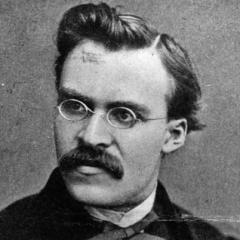
Friedrich Nietzsche
Friedrich Nietzsche

Friedrich Nietzsche was a German philosopher, cultural critic, poet, and writer whose works have had a profound impact on subsequent philosophy, literature, and thought. His ideas revolve around concepts such as the 'will to power', the 'Übermensch', and the 'eternal recurrence'. more

You May Also Like

“How well do you know the people who raised you? Look around your dining room table. Look around at your loved ones, especially the elders. The grandparents and the aunts and uncles who used to give you shiny new quarters and unvarnished advice. How much do you really know about their lives. Perhaps you've heard that they served in a war, or lived for a time in a log cabin, or arrived in this country speaking little or no English. Maybe they survived the Holocaust or the Dust Bowl. How were they shaped by the Depression or the Cold War, or the stutter-step march towards integration in their own community? What were they like before they married or took on mortgages and assumed all the worries that attend the feeding, clothing, and education of their children? If you don't already know the answers, the people who raised you will most likely remain a mystery, unless you take the bold step and say: Tell me more about yourself.”

“[My grandmother Mamie] used to say, 'Marion, if you don't feel right, if you don't feel good, just go outside. Take care of your flower bed and forget about everything else. If it's wintertime, go dig yourself a path in the snow whether you need it or not. You don't have to think too much to plant anything or scoop snow, and your mind can go back and figure out what's wrong.' I still take her advice to this day. (From Marion "Strong Medicine" Gould)”

“We arrive at 69th Street, turn the corner, and walk toward the entrance to the Hunter auditorium. The doors are open. Inside, two or three hundred Jews sit listening to the testimonials that commemorate their unspeakable history. These testimonials are the glue that binds. They remind and persuade. They heal and connect. Let people make sense of themselves. ... 'Come inside,' she says softly to me, thinking to do me a good turn. 'Come, you'll feel better.' I shake my head no. 'Being Jewish can't help me anymore,' I tell her.”

“To illustrate this claim, Benjamin relates a fable about a father who taught his sons the merits of hard work by fooling them into thinking that there was buried treasure in the vineyard by the house. The turning of soil in the vain search for gold results in the discovery of a real treasure: a wonderful crop of fruit. With the war came the severing of ‘the red thread of experience’ which had connected previous generations, as Benjamin puts it in ‘Sketched into Mobile Dust’. The ‘fragile human body’ that emerged from the trenches was mute, unable to narrate the ‘forcefield of destructive torrents and explosions’ that had engulfed it. Communicability was unsettled. It was as if the good and bountiful soil of the fable had become the sticky and destructive mud of the trenches, which would bear no fruit but only moulder as a graveyard. ‘Where do you hear words from the dying that last and that pass from one generation to the next like a precious ring?’ Benjamin asks.”