Quotessence
Home / Quotes / Quote by Bonnie Jo Campbell

Quote by Bonnie Jo Campbell

“The big willow clogging the channel was evidence of the damage men could do, but maybe they would be different if they were allowed on the island. Maybe they would learn to be a little more like women. They wouldn't have to start fires here the way they did at Boneset; they wouldn't have to burn the rotting wood where hen-of-the-woods mushrooms grew. Donkey would have to tell them about all the special care the island needed. Every crevice and swollen place needed a certain treatment--- different in spring than in summer or fall. There were nesting sites to watch out for, broken places in a tree's bark that could be sealed with goop to help the tree survive. The women who had lived on the island all this time moved carefully, tenderly, because there was so much to lose.”

Quote by Bonnie Jo Campbell

Work

The Waters

Browse quotes and source details for this work. more

Author
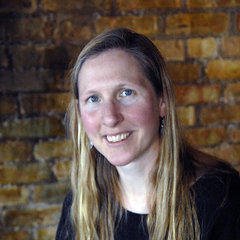
Bonnie Jo Campbell
Bonnie Jo Campbell

Bonnie Jo Campbell is an American novelist born in 1962. Her works are often set in the rural Michigan, exploring themes of rural life, family relationships, and social issues. Campbell is praised for her unique narrative style and profound insights into human nature. more

You May Also Like

“There can be no easy reconciliations, only complicated truths, told without shame. The murderers among us would have us believe that history is slippery and unknowable. Insisting otherwise is an act of defense... But the past never goes away. The fear and pain are still there, buried in our brains like mines. It is better to defuse them than to leave them entombed, quietly, waiting for a single misstep. That is why I am telling my story.”

“Well,' said Can o' Beans, a bit hesitantly,' imprecise speech is one of the major causes of mental illness in human beings.' Huh?' Quite so. The inability to correctly perceive reality is often responsible for humans' insane behavior. And every time they substitute an all-purpose, sloppy slang word for the words that would accurately describe an emotion or a situation, it lowers their reality orientations, pushes them farther from shore, out onto the foggy waters of alienation and confusion.' The manner in which the other were regarding him/her made Can O' Beans feel compelled to continue. 'The word neat, for example, has precise connotations. Neat means tidy, orderly, well-groomed. It's a valuable tool for describing the appearance of a room, a hairdo, or a manuscript. When it's generically and inappropriately applied, though, as it is in the slang aspect, it only obscures the true nature of the thing or feeling that it's supposed to be representing. It's turned into a sponge word. You can wring meanings out of it by the bucketful--and never know which one is right. When a person says a movie is 'neat,' does he mean that it's funny or tragic or thrilling or romantic, does he mean that the cinematography is beautiful, the acting heartfelt, the script intelligent, the direction deft, or the leading lady has cleavage to die for? Slang possesses an economy, an immediacy that's attractive, all right, but it devalues experience by standardizing and fuzzing it. It hangs between humanity and the real world like a . . . a veil. Slang just makes people more stupid, that's all, and stupidity eventually makes them crazy. I'd hate to ever see that kind of craziness rub off onto objects.”

“How did the name misfit even come about?" Sam asked. "It's so... dumb." Willo laughed. "Well, it's really not," she said. "We used to call them all sorts of slang terms: kooks, greasers, killjoys, chumps, and we had to keep changing the name as times changed. We used nerds for a long time, and then we started calling them dweebs." Willo hesitated. "And then a group of kids wasn't so nice to your mom." "I had braces," Deana said. "I had pimples. I had a perm. You do the math." She smiled briefly, but Sam could tell the pain was still there. Deana continued: "And I worked here most of the time so I really didn't get a chance to do a lot with friends after school. It was hard." This time, Willo reached out to rub her daughter's leg. "Your mom was pretty down one Christmas," she said. "All of the kids were going on a ski trip to a resort in Boyne City, but she had to stay here and work during the holiday rush. She was moping around one night, lying on the couch and watching TV..." "... stuffing holiday cookies in my mouth," Deana added. "... and Rudolph the Red-Nosed Reindeer came on. She was about to change the channel, but I made her sit back down and watch it with me. Remember the part about the Island of Misfit Toys?" Sam nodded. Willo continued. "All of those toys that were tossed away and didn't have a home because they were different: the Charlie-in-the-Box, the spotted elephant, the train with square wheels, the cowboy who rides an ostrich..." "... the swimming bird," Sam added with a laugh. "And I told your mom that all of those toys were magical and perfect because they were different," Willo said. "What made them different is what made them unique." Sam looked at her mom, who gave her a timid smile. "I walked in early the next morning to open the pie pantry, and your mom was already in there making donuts," Willo said. "She had a big plate of donuts that didn't turn out perfectly and she looked up at me and said, very quietly, 'I want to start calling them misfits.' When I asked her why, she said, 'They're as good as all the others, even if they look a bit different.' We haven't changed the name since.”