Quotessence
Home / Quotes / Quote by Alexei Navalny

Quote by Alexei Navalny

“The criticisms made of Gorbachev-that he was indecisive, spineless, lily-livered, half-hearted, evasive-were all true. Just as it was true that he earned them all in his opposition to the radical democrats, whom I idolized at the time. The camp of those who hated Gorbachev was divided between those who did not like the reforms and those who did not like the fact that he was introducing them too slowly. The latter, to whom I belonged, hated him much more fervently: we had a goal we could see elsewhere-complete freedom of speech, capitalism, and democracy-and that made us active critics hammering away. We also deprived Gorbachev of support from the only section of society he could count on. So when, in his own good time, having missed every opportunity, he ceased to be afraid and ran for office (before that, he had been elected only by collegial bodies like congresses and supreme soviets whose subordinate status removed the risk of losing), he gained a derisory 0.51 percent of the vote. The older I grew, the more intolerant I became of Gorbachev, but now I view him positively, if only because he proved completely incorruptible. In that he was unique. Everyone who had power during the transition from socialism to capitalism tried to grab as big a slice of the pie as they could. The Communist leaders of the central Asian republics of the U.S.S.R. became owners of entire countries and promptly turned them into totalitarian states. Ministers scooped up whole industries for which they had responsibility. Directors of factories found ingenious ways of becoming their owners. Nimble-footed members of the Young Communist League, whose resonant voices had vowed their preparedness to give their lives for the party, now employed their influence and connections to become oligarchs. When Gorbachev stepped down as president, he took nothing with him, though there had been colossal opportunities for him to get rich. No one would have blinked an eye if a couple of major factories had somehow been transferred to offshore companies under the guise of "joint ventures." He could have helped himself to state property abroad. It would have been so easy to siphon party money into personal accounts. He did none of that. People can argue as much as they like that it was because he did not have the opportunity, but the fact remains that he made no attempt to do so. In my view, that was because he was a different kind of person. Not avaricious.”

Quote by Alexei Navalny

Work

Patriot: A Memoir

Browse quotes and source details for this work. more

Author
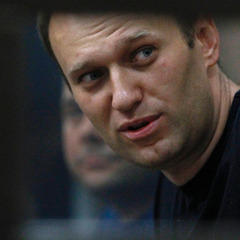
Alexei Navalny
Alexei Navalny

Alexei Navalny is a Russian lawyer and political activist recognized for his anti-corruption efforts and criticism of the Russian government. Born on June 4, 1976, he has gained international acclaim for his work in exposing corruption within the Russian political establishment. more

You May Also Like

“That is why, reflecting on that nauseating possible future, I am so grateful to Gorbachev for having done away with it. Not that meant to. He goofed, and that is precisely what I have to thank him for...He overlooked the fact that inviting everyone into the garden would not lead to deferential discussion with an elite, full of allusive hints and skirting around contentious matters. On the contrary, realizing that they now could speak out without getting beaten up, the denizens of the basement would climb up to the roof en masse and state bluntly that they had no water to drink and nothing to eat. The weight of their words, the reverberation of their stamping boots, and the indignation in their hearts would make everything come tumbling down. I didn't regret that in the slightest. After all, what had I lost? Russia, my country, was still there. I still had my language, Tolstoy and Dostoevsky. Moscow and Kazan and Rostov. The army was still there, and the state. Even the bureaucrats were still where they had been. Kiev, Tallinn, and Riga did not vanish into thin air. Everything was as it had been. You could go to those cities if you wanted to. What had changed was that now you had a choice, you had freedom. What remains of that freedom in Putin's Russia today, which is trying to pretend it is the U.S.S.R., is in fact much more than there was then. You can now choose your profession, where you want to live, and your lifestyle. You no longer have to tie yourself in knots in a competition to see who can be the more two-faced in order to be allowed a trip abroad. You can just buy a ticket and go. At this point someone almost always says, "Only nowadays you have to have enough money," and then reminisces about the social guarantees and equality in the U.S.S.R. In reality there was nothing of the sort. The social gulf between a collective farm worker and a member of the regional Communist Party committee was no less than the gulf we have now between an oligarch and one of today's many average workers. Housing and cars were, by an order of magnitude, less accessible than they are today. Sure, many people received accommodation for free, but to get it they had to wait twenty years. Of course, there is a huge difference in the ceilings for luxury and wealth then and now. In the U.S.S.R. the ceiling was on the first floor of a dacha in the "writers' village" outside Moscow. Now there is no ceiling; it has disappeared unimaginably far away, bursting through the roofs of French chalets and skyscrapers on the edge of Central Park in New York. That, of course, is annoying But it does not alter the indisputable fact that although the mass of the population might indeed have been moved by grim tectonics, as Tolstoy would have it, it was nevertheless Gorbachev who started patching something up, but in the end hammered a nail in the wrong way and everything fell down. On its ruins, everyone was given the chance to live a decent life without the perpetual lying and hypocrisy. If, of course, they wanted it.”

“Niger jest drugim na świecie producentem uranu. Znajdujące się na pustyni zasoby są naprawdę ogromne, a uran jest bardzo poszukiwanym surowcem. Kraj nie czerpie jednak z tego wielkich korzyści, Monopol na wydobycie posiadała zawsze państwowa firma francuska Areva, płacąc państwu nigeryjskiemu niewielki procent za dzierżawę. W 2007 roku odkryte zostały złoża w Azeliku i prezydent Mamadou Tandja postanowił rozpocząć nową grę: wydobyciem miała się zająć spółka chińsko-nigerska. Areva protestowała, ale bez skutku. Dwa lata później znaleziono kolejne złoże, w Imourarene. Uranem zainteresowana była Francja, najbardziej "nuklearne" państwo świata: trzy czwarte jego elektryczności pochodzi z elektrowni jądrowych wykorzystujących surowiec, którego ten kraj nie posiada. Niemal połowa pochodzi z Nigru. W lutym 2010 roku prezydent Tandja przystąpił do rozmów z Chińczykami, chcąc rozpocząć eksploatację nowych złóż. Kilka dni później został odsunięty od władzy w wyniku zamachu stanu, którym kierował pułkownik Djibo. Objąwszy rządy, pułkownik zerwał rozmowy z Chińczykami, potwierdzając "wdzięczność i lojalność" swego kraju wobec Francji i Arevy. W następnym roku w wyborach powszechnych został wyłoniony nowy prezydent, Mahamadou Issoufou, inżynier górnictwa pracujący dla Arevy.”

“Mi-a povestit, mie, ca unui mare, frica lui. A zis că pe-acolo pe unde fusese dus, în Rusia, în lagăr, pe front, din nou în lagăr în România, ca prizonier, apoi cu refugiul şi bombardamentele, cunoscuse frica. Dar era numai frica lui. Că frica de moartea ta nu e cu adevărat frică - tot nu depinde de tine moartea ori nemoartea ta. Frica cea mare, adevărată, a zis tata, e cea pentru alţii: nevastă, copii. Ştii că de tine a depins să-i fereşti de pericol şi n-ai făcut-o. Frica cea mare nu e moartea ta, e viaţa pe care or s-o îndure ai tăi, din pricina ta.”