Quotessence
Home / Quotes / Quote by Kader Abdolah

Quote by Kader Abdolah

“Nessuno teneva più il conto degli anni e non aveva senso contare i mesi. Il tempo era immobile per chi era immerso nel dolore, per chi era morto e per chi piangeva i suoi morti. Anche per chi vangava in giardino per seppellire la sua pena e per chi in cucina preparava antiche pietanze per suddividere la sofferenza in tanti piatti.”

Quote by Kader Abdolah

Work

Het huis van de moskee

Browse quotes and source details for this work. more

Author
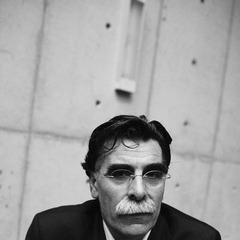
Kader Abdolah
Kader Abdolah

Kader Abdolah is a Dutch writer of Iranian descent, known for his rich literary works. His writings often explore the history, culture, and social issues of Iran, enjoying great popularity among readers. more

You May Also Like

“We need you to go out there and cover for us while we search for whoever's bugging us," Amy said. "Whoever it is, he or she is probably nearby." "All you have to do is keep talking. We've thought a lot about this, and we think you have the necessary skills," Dan said. "Very funny, Dan-o. But true. When it comes to nonstop chat, I'm the champ," Nellie agreed. Nellie turned off the shower and they all returned to the main room. "That pool is so fine," she said, as if she'd never been interrupted. "I met this couple from Scotland, and I was all, whoa, you have some delish smoked salmon in your excellent country...." Amy raised the window carefully, not making a sound. She and Dan quietly climbed out. "--and they were all, 'Aye, lassie, we dew, ye ken our bonny fish, ye dew!'" Nellie said in a terrible Scottish accent. "So I said, 'You know what ye lads and lassies need in Scotland? Bagels! To go with!' 'Whoa,' they said, 'lassie, ye canna be serious, that is one orrrig-in-al guid idea....'" "Okay, you can stop now." "Man, that's guid news," Nellie said. "This lassie is about to pass out.”

“In the tenth century BC, the priests of India devised the Brahmodya competition, which would become a model of authentic theological discourse. The object was to find a verbal formula to define the Brahman, the ultimate and inexpressible reality beyond human understanding. The idea was to push language as far as it would go, until participants became aware of the ineffable. The challenger, drawing on his immense erudition, began the process by asking an enigmatic question and his opponents had to reply in a way that was apt but equally inscrutable. The winner was the contestant who reduced the others to silence. In that moment of silence, the Brahman was present - not in the ingenious verbal declarations but in the stunning realisation of the impotence of speech. Nearly all religious traditions have devised their own versions of this exercise. It was not a frustrating experience; the finale can, perhaps, be compared to the moment at the end of the symphony, when there is a full and pregnant beat of silence in the concert hall before the applause begins. The aim of good theology is to help the audience to live for a while in that silence.”