“And in this we must for the most part entertain ourselves with ourselves, and so privately that no exotic knowledge or communication be admitted there; there to laugh and to talk, as if without wife, children, goods, train, or attendance, to the end that when it shall so fall out that we must lose any or all of these, it may be no new thing to be without them. We have a mind pliable in itself; that will be company; that has wherewithal to attack and to defend, to receive and to give: let us not then fear in this solitude to languish under an uncomfortable vacuity.”
Quote by Michel de Montaigne
Author
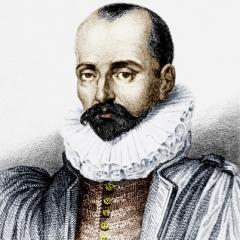
Michel de Montaigne
Michel de Montaigne was a French Renaissance philosopher, essayist, and writer. He is considered one of the most significant figures in the history of the essay. Montaigne's work, particularly his book 'Essays', has been influential in the development of modern prose. more
You May Also Like
“I...think it much more supportable to be always alone, than never to be so.”
“moonlight disappears down the hills mountains vanish into fog and i vanish into poetry.”
Source: A Thousand Flamingos
“Be able to be alone. Lose not the advantage of solitude, and the society of thyself.”
Source: The Woodlanders
Source: God's Joyful Surprise: Finding Yourself Loved
“The greatest thing in the world is to know how to live to yourself.”
“Crime, too, means solitude, even if a thousand people join together to commit it.”
Source: Caligula and Three Other Plays
Source: Anecdotes of Samuel Johnson, LL.D. during the last twenty years of his life
Source: The Essays of Michael De Montaigne, Vol. 2 of 3 (Classic Reprint): Translated Into English, With Very Considerable Amendments and Improvements From the Most Accurate French Edition of Peter Coste