Quotessence
Home / Quotes / Quote by Rumi

Quote by Rumi

“For beloved cross every pass Worldly affairs slow their pace A flowing brook amidst the grass Flowing tears his face shall trace His ego is shattered glass Self-estranged, himself deface Sense the Divine in spirit and mass If he is truly seeking grace”

Quote by Rumi

Work

دیوان كلیات شمس تبریزی

Browse quotes and source details for this work. more

Author
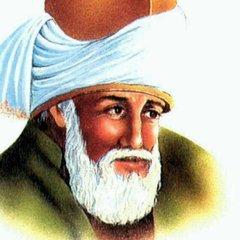
Rumi
Rumi

Rumi, also known as Jalal al-Din Rumi, was a 13th-century Persian poet and Sufi mystic. His poetry is renowned for its profound philosophy, beautiful language, and strong emotions, and has had a profound impact on the world. more

You May Also Like

“Made from divinity must mean mindstate to create is intrinsic - no fiction. Stop playin' with your power, your inner 'G', and build on purpose - accordingly. Being free is for free, so force the issue.”

“It must never be forgotten that for non-modern man - whether he be ancient or contemporary - the very stuff of the Universe has a sacred aspect. The cosmos speaks to man and all of its phenomena contain meaning. They are symbols of a higher degree of reality which the cosmic domain at once veils and reveals. The very structure of the cosmos contains a spiritual message for man and is thereby a revelation coming from the same source as religion itself. Both are the manifestations of the Universal Intellect, the Logos, and the cosmos itself is an integral part of that total Universe of meaning in which man lives and dies.”

“You have read for years, and where has it got you? Your head is filled with masses of ideas and concepts, and you yearn for experience that others on the path have had. Before your true nature is understood all those ideas and concepts must melt away. No books — the only book is the manuscript of nature, the lesson is life itself. Live passionately! Who said that this path should be so serious that there is no joy in it? This is the most exciting adventure possible, and it should be enjoyed. — Hamid”

“Diejenigen, die Offenbarungen empfangen haben, gaben uns heilige Bücher wie die Bibel, den Qur‘an, die Bhagavad Gita; Hunderte und Tausende Jahre sind vergangen und ihre heiligen Lehren blieben bis heute lebendig. Und doch müssen wir wissen, dass das, was diese Schriften uns in Form von Predigten und Lehren geben, eine Interpretation der lebendigen Weisheit ist, die nicht vollständig in Worten ausgedrückt werden kann. Wir können dieses lebendige Wissen nur kennenlernen, wenn wir es selbst erleben, indem wir unser Herz öffnen. Dann ist der Zweck des Lebens erfüllt. (S. 232)”

“Weil das menschliche Wesen alles, was im Himmel und auf Erden ist, in sich trägt, wird der Mensch als ein Universum in sich selbst bezeichnet. Gott sagt in Bezug auf den Menschen im Koran: „Wir haben ihn zu unserem Kalifen gemacht.“ (Koran 2:30) Mit Kalif ist gemeint, dass der Mensch ein Repräsentant Gottes, ein Anführer ist, unter dessen Obhut das Universum gestellt ist; denn das menschliche Wesen ist selbst ein Universum. (S. 124)”