Quotessence
Home / Quotes / Quote by Michel Houellebecq

Quote by Michel Houellebecq

“Оказалось, что я не способен жить ради самого себя, а ради кого еще я мог бы жить? Человечество меня не интересовало, более того, внушало мне отвращение, я вовсе не считал всех людей братьями, особенно если рассматривать достаточно узкий фрагмент человечества, состоящий, например, из моих соотечественников или бывших коллег. При этом, как ни досадно, я вынужден был признать этих людей себе подобными, и именно это сходство и побуждало меня избегать их; хорошо бы мне найти женщину, это было бы классическим и проверенным решением вопроса, женщина, разумеется, тоже человек, но все же она являет собой несколько иной тип человека и привносит в жизнь легкий аромат экзотики.”

Quote by Michel Houellebecq

Work

Soumission

Browse quotes and source details for this work. more

Author

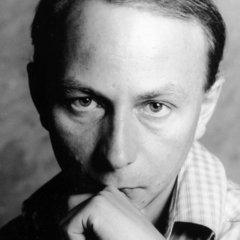
Michel Houellebecq
Michel Houellebecq

Michel Houellebecq is a French author known for his incisive social commentary and unique literary style. His works often explore themes of loneliness, consumerism, and the meaning of human existence in modern society. more

You May Also Like

“All Mad" 'He is mad as a hare, poor fellow, And should be in chains,' you say, I haven't a doubt of your statement, But who isn't mad, I pray? Why, the world is a great asylum, And the people are all insane, Gone daft with pleasure or folly, Or crazed with passion and pain. The infant who shrieks at a shadow, The child with his Santa Claus faith, The woman who worships Dame Fashion, Each man with his notions of death, The miser who hoards up his earnings, The spendthrift who wastes them too soon, The scholar grown blind in his delving, The lover who stares at the moon. The poet who thinks life a paean, The cynic who thinks it a fraud, The youth who goes seeking for pleasure, The preacher who dares talk of God, All priests with their creeds and their croaking, All doubters who dare to deny, The gay who find aught to wake laughter, The sad who find aught worth a sigh, Whoever is downcast or solemn, Whoever is gleeful and gay, Are only the dupes of delusions— We are all of us—all of us mad.”

“Ruttie’s suicide would be hidden for many years and only those in the Jinnahs’ inner circle were told the truth. Yet as Sarojini Naidu wrote to her daughter Padmaja: Poor little Ruttie had taken an overdraught of veronal … But, darling you realize of course that this is not the official version … Poor mad little suffering child. Maybe [now] she’ll find the peace that she was denied – or denied herself on earth. Jinnah’s friend Dwarkadas sat next to him at Ruttie’s funeral, and he later described the scene. Never have I found a man so sad and bitter. He screamed his heart out … Something I saw had snapped in him. The death of his wife was not just a sad event, nor just something to be grieved over, but he took it, this act of God, as a failure and a personal defeat in his life.75 With Ruttie gone, Jinnah found solace in his still-nameless daughter, who soon took the name Dina. As a single father, he made her his primary project, moving to London and enrolling her at a new school in Sussex. By the time he returned to India, he would be a changed man. By early 1929, with Jinnah living in Europe, Gandhi once again assumed supreme leadership of Indian politics. Looking to find a way to unite everyone, Hindu or Muslim, Bengali or Burmese, behind a single cause, he announced his intention to stage a national protest against the British Salt Act which gave the British government a monopoly on the manufacture and distribution of Indian salt.”