Quotessence
Home / Quotes / Quote by Aristotle

Quote by Aristotle

“Dignity does not consist in possessing honors, but in the consciousness that we deserve them.”

Quote by Aristotle

Author
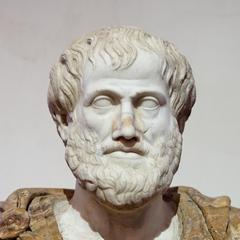
Aristotle
Aristotle

Aristotle, a renowned Greek philosopher, is one of the founders of Western philosophy. His thoughts covered a wide range of fields, including ethics, logic, politics, and had a profound impact on the world. more

You May Also Like

“The wild nature has a vast integrity to it. It means to establish one's territory, to find one's pack, to be in one's body with certainty and pride regardless of the body's gifts and limitations, to speak and act in one's own behalf, to be aware, alert, to draw on the innate feminine powers of intuition and sensing, to come into one's cycles, to find what one belongs to, to rise with dignity, to retain as much consciousness as possible.”

“I can’t do nothing for you either, Billy. You know that. None of us can. You got to understand that as soon as a man goes to help somebody, he leaves himself wide open. He has to be cagey, Billy, you should know that as well as anyone. What could I do? I can’t fix your stuttering. I can’t wipe the razorblade scars off your wrists or the cigarette burns off the back of your hands. I can’t give you a new mother. And as far as the nurse riding you like this, rubbing your nose in your weakness till what little dignity you got left is gone and you shrink up to nothing from humiliation, I can’t do anything about that, either.”

“He made a good salary but he did not flaunt it. He’d been raised in Chicago proper by a Lithuanian Jewish mother who had grown up in poverty, telling stories, often, of extending a chicken to its fullest capacity, so as soon as a restaurant served his dish, he would promptly cut it in half and ask for a to-go container. Portions are too big anyway, he’d grumble, patting his waistline. He’d only give away his food if the corners were cleanly cut, as he believed a homeless person would just feel worse eating food with ragged bitemarks at the edges – as if, he said, they are dogs, or bacteria. Dignity, he said, lifting his half-lasagna into its box, is no detail.”

“We are slaves, deprived of every right, exposed to every insult, condemned to certain death, but we still possess one power, and we must defend it with all our strength for it is the last - the power to refuse our consent. So we must certainly wash our faces without soap in dirty water and dry ourselves on our jackets. We must polish our shoes, not because the regulation states it, but for dignity and propriety. We must walk erect, without dragging our feet, not in homage to Prussian discipline but to remain alive, not to begin to die.”