“A miracle is a violation of the laws of nature; and because firm and unalterable experience has established these laws, the case against a miracle is—just because it is a miracle—as complete as any argument from experience can possibly be imagined to be. Why is it more than merely probable that all men must die, that lead cannot when not supported remain suspended in the air, that fire consumes wood and is extinguished by water, unless it is that these events are found agreeable to the laws of nature, and for things to go differently there would have to be a violation of those laws, or in other words a miracle? Nothing is counted as a miracle if it ever happens in the common course of nature. When a man who seems to be in good health suddenly dies, this isn't a miracle; because such a kind of death, though more unusual than any other, has yet often been observed to happen. But a dead man’s coming to life would be a miracle, because that has never been observed in any age or country. So there must be a uniform experience against every miraculous event, because otherwise the event wouldn't count as a ‘miracle’. And as a uniform experience amounts to a proof, we have here a direct and full proof against the existence of any miracle, just because it’s a miracle; and such a proof can’t be destroyed or the miracle made credible except by an opposite proof that is even stronger. This clearly leads us to a general maxim that deserves of our attention: No testimony is sufficient to establish a miracle unless it is of such a kind that its falsehood would be more miraculous than the fact that it tries to establish. And even in that case there is a mutual destruction of arguments, and the stronger one only gives us an assurance suitable to the force that remains to it after the force needed to cancel the other has been subtracted.”
Quote by David Hume
Work
This book delves into the fundamental questions of human perception, reason, and the limits of human understanding, offering a comprehensive examination of the nature of knowledge and its acquisition. more
Author
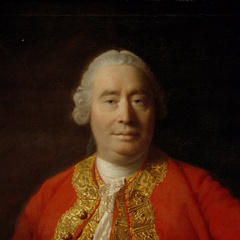
David Hume, born on May 7, 1711, in Edinburgh, Scotland, and died on August 25, 1776, was an outstanding philosopher, historian, and economist. Known for his contributions to empiricism and skepticism, his works have had a profound impact on subsequent philosophy, economics, and psychology. more
You May Also Like
“It is a no that means maybe, and the more passionate the no, the more definite the maybe.”
“It's funny, everyone seems to ask me that in the last few days.”
“It is by being awake to God in us that we can increasingly see God in the world around us.”
“Open your eyes, and trust your own unique way of receiving answers.”