Quotessence
Home / Quotes / Quote by Albert Camus

Quote by Albert Camus

“God is not needed to create guilt or to punish. Our fellow men suffice, aided by ourselves. You were speaking of the Last Judgement. Allow me to laugh respectfully. I shall wait for it resolutely, for I have known what is worse, the judgement of men. For them, no extenuating circumstances; even the good intention is ascribed to crime. Have you at least heard of the spitting cell, which a nation recently thought up to prove itself the greatest on earth? A walled-up box in which the prisoner can stand without moving. The solid door that locks him in the cement shell stops at chin level. Hence only his face is visible, and every passing jailer spits copiously on it. The prisoner, wedged into his cell, cannot wipe his face, though he is allowed, it is true. to close his eyes. Well, that, mon cher, is a human invention. They didn't need God for that little masterpiece.”

Quote by Albert Camus

Work

The fall

A narrative that delves into the complexities of personal and societal decline, examining the journey from stability to chaos and the search for redemption. more

Author

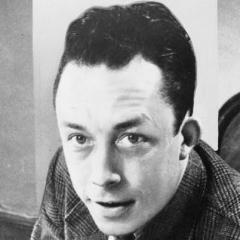
Albert Camus
Albert Camus

Albert Camus was a French author and philosopher, born on November 7, 1913, and died on January 4, 1960. Known for his unique existentialist philosophy and profound insights into human suffering, Camus' works include 'The Stranger', 'The Plague', and 'The Myth of Sisyphus', which have had a profound impact on 20th-century literature. more

You May Also Like

“My chances of returning to America were small, and I thought with regret about all the things I would miss about America: the TV dinner; air-conditioning; a well-regulated traffic system that people actually followed; a relatively low rate of death by gunfire, at least compared with our homeland; the modernist novel; freedom of speech, which, if not as absolute as Americans liked to believe, was still greater in degree than in our homeland; sexual liberation; and, perhaps most of all, that omnipresent American narcotic, optimism, the unending flow of which poured through the American mind continuously, whitewashing the graffiti of despair, rage, hatred, and nihilism scrawled there nightly by the black hoodlums of the unconscious. There were also many things about America with which I was less enchanted, but why be negative?”

“We're living among infinite possibilities. And the prevalent philosophies of post-modernist pessimism that come out of the universities are really a major tragedy. The opportunities for progress and change… are absolutely tremendous. Anybody who tells you that we're running out of resources or in a terrible mess--they are idiots. We can't run out of resources. Resources exist when the human mind sees how to use something. To say we are running out of resources is like saying we are running out of brain cells.”

“My thoughts on the descent of our moral prejudices – for that is what this polemic is about – were first set out in a sketchy and provisional way in the collection of aphorisms entitled Human, All Too Human. A Book for Free Spirits, which I began to write in Sorrento during a winter that enabled me to pause, like a wanderer pauses, to take in the vast and dangerous land through which my mind had hitherto travelled. This was in the winter of 1876–7; the thoughts themselves go back further. They were mainly the same thoughts which I shall be taking up again in the present essays – let us hope that the long interval has done them good, that they have become riper, brighter, stronger and more perfect! The fact that I still stick to them today, and that they themselves in the meantime have stuck together increasingly firmly, even growing into one another and growing into one, makes me all the more blithely confident that from the first, they did not arise in me individually, randomly or sporadically but as stemming from a single root, from a fundamental will to knowledge deep inside me which took control, speaking more and more clearly and making ever clearer demands. And this is the only thing proper for a philosopher. We have no right to stand out individually: we must not either make mistakes or hit on the truth individually. Instead, our thoughts, values, every ‘yes’, ‘no’, ‘if ’ and ‘but’ grow from us with the same inevitability as fruits borne on the tree – all related and referring to one another and a testimonial to one will, one health, one earth, one sun. – Do you like the taste of our fruit? – But of what concern is that to the trees? And of what concern is it to us philosophers? . . .”

“The disciplines of physical exercise, meditation and study aren't terribly esoteric. The means to attain a capability far beyond that of the so-called ordinary person are within the reach of everyone, if their desire and their will are strong enough. I have studied science, art, religion and a hundred different philosophies. Anyone could do as much. By applying what you learn and ordering your thoughts in an intelligent manner it is possible to accomplish almost anything. Possible for an 'ordinary person.' There's a notion I'd like to see buried: the ordinary person. Ridiculous. There is no ordinary person.”