Quotessence
Home / Quotes / Quote by Doris Lessing

Quote by Doris Lessing

“I learned that the resentment, the anger, is impersonal. It is the disease of women in our time. I can see it in women's faces, their voices, every day, or in the letters that come to the office. The woman's emotion: resentment against injustice, an impersonal poison. The unlucky ones, who do not know it is impersonal, turn it against their men. The lucky ones like me—fight it. It is a tiring fight.”

Quote by Doris Lessing

Work

The Golden Notebook

The Golden Notebook is a seminal work of modern literature, weaving together the personal and political narratives of a woman writer as she grapples with her own identity and the tumultuous events of the 20th century. more

Author

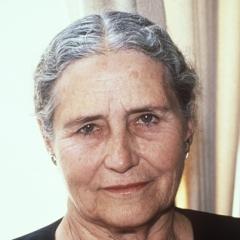
Doris Lessing
Doris Lessing

Doris Lessing was a British novelist known for her profound psychological insights and critical exploration of social and political issues. Her works covered a wide range of themes from personal experiences to global concerns, including colonialism, gender roles, and women's liberation. Lessing's writing style is unique and vivid, and she has had a significant impact on postcolonial and feminist literature. more

You May Also Like

“The idea that a pregnant person gets the final decision should not lead the men in their lives to just think of themselves as supporters or allies. Men really are stakeholders and beneficiaries when it comes to their partner's reproductive decisions, and they should be out there marching because abortion access is "their issue" too”

“What must it be like to sit among women with the same animating vitality? To build vast empires and heretofore undreamt worlds? To control the exchange of ideas, the evolution of society? She had never really been all that interested in traditional success or power, but for a moment she saw the appeal of it, of an empire ruled only by women, and then the appeal of wielding might that could bring it all down, on a whim. An entire ruined kingdom as manifestation of one woman’s rage.”

“She will save herself by proving that she is loyal, obedient, useful, even fanatic in the service of the men around her. She is the happy hooker, the happy homemaker, the exemplary Christian, the pure academic, the perfect comrade, the terrorist par excellence. Whatever the values, she will embody them with a perfect fidelity. The males rarely keep their part of the bargain as she understands it: protection from male violence against her person. But the militant conformist has given so much of herself […] that this betrayal is akin to nailing the coffin shut; the corpse is beyond caring.”

“Undoubtedly our own meanings are partially hidden from us and it is difficult to have access to them. We may use the English language our whole lives without ever noticing the distortions and omissions; we may never become aware that there is no symbol for women's strength. But although it is not always easy to get outside this language trap, to get outside the limitations of one's own language, it is not impossible. There are clues, if one is prepared to look for them.”