Quotessence
Home / Quotes / Quote by Agatha Christie

Quote by Agatha Christie

“We are ready to despair too soon, we are ready to say, ‘What’s the good of doing anything?’ Hope is the virtue we should cultivate most in this present day and age.”

Quote by Agatha Christie

Author
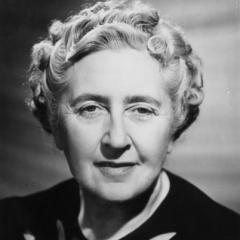
Agatha Christie
Agatha Christie

Agatha Christie, a renowned British detective novel writer, is known as the Queen of Detective Fiction. She was born on September 15, 1890, and passed away on January 12, 1976. Christie's works are characterized by intricate plots, unique reasoning, and vivid characters, and have had a profound impact on detective fiction worldwide. more

You May Also Like

“Whence the possibility of an ideological analysis of Disneyland (L. Marin did it very well in Utopiques, jeux d'espace [Utopias, play of space]): digest of the American way of life, panegyric of American values, idealized transposition of a contradictory reality. Certainly. But this masks something else and this "ideological" blanket functions as a cover for a simulation of the third order: Disneyland exists in order to hide that it is the "real" country, all of "real" America that is Disneyland (a bit like prisons are there to hide that it is the social in its entirety, in its banal omnipresence, that is carceral). Disneyland is presented as imaginary in order to make us believe that the rest is real, whereas all of Los Angeles and the America that surrounds it are no longer real, but belong to the hyperreal order and to the order of simulation. It is no longer a question of a false representation of reality (ideology) but of concealing the fact that the real is no longer real, and thus of saving the reality principle.”

“There was something else amusing about the house: the irony that the most important battle of the American Revolution--the shoot-out at the Old North Bridge--had taken place just outside the residence of the pacifist Ralph Waldo Emerson. True, Emerson was born after the battle in 1803, but his grandfather had been living in the house at the time of the Revolution, and the juxtaposition of such pacifism against such violence struck Paul as a symbol of an eternal truth about American history: Nixon, that goofy Vietnam War mortician, was right: the silent majority ruled (not the rebellious, pacifist fringe); the majority killed for their property; and there was nothing really revolutionary about the minutemen , who won a war and took over the entire country to ultimately build fast-food restaurants and Disneyland while abolitionists, pacifists, hippies, and environmentalists were left to make well-intended flatulent noises--to write poems such as Ginsberg's "Howl"--in books for other defeated noisemakers.”

“Successful people have no fear of failure. But unsuccessful people do. Successful people have the resilience to face up to failure—learn the lessons and adapt from it.”

“Lo que Disney decidió hacer, y es parte de la forma única de Disney de hacer las cosas, fue hacer que todos estos trabajadores se sintieran parte de la familia Disney: hacerlos que se identificaran con Epcot, aun cuando en realidad no formaran parte de la organización Disney. Esto no se había hecho nunca antes. Así es como lo hicieron. Cerraron la obra un domingo al mes durante un año. Hay que tener en mente que se trataba del proyecto de construcción más grande del mundo y que se acercaba una fecha de entrega inamovible, por lo que cerrar la obra un día al mes era muy importante. Disney trajo varias carpas de circo y las colocó en lo que a la larga sería el estacionamiento de Epcot. El servicio de alimentación se encontraba en una de las tiendas. Cocinábamos hot dogs y hamburguesas, y servíamos Coca - Cola, papas fritas, todo eso. En otras palabras, celebrábamos un día de campo.”

“Far from representing a benign cultural force, Disney's theme parks offer prepackaged, sanitized versions of America's past, place a strong emphasis on the virtues of the individual as an essentially consuming subject, trans- form the work of production into the production of play, and ignore the exclusionary dynamics of class and race that permeate Disney culture.”