Quotessence
Home / Quotes / Quote by Mosab Hassan Yousef

Quote by Mosab Hassan Yousef

“In the weeks to follow, the Shin Bet would begin searching for lessons to be found in the rubble of what would come to be known simply as 9/11. Why had the U.S. intelligence services not been able to prevent the disaster? For one thing, they operated independently and competitively. For another, they relied mostly on technology and rarely collaborated with terrorists. Those tactics may have been fine in the Cold War, but it’s pretty tough to combat fanatical ideals with technology.”

Quote by Mosab Hassan Yousef

Work

Son of Hamas

Browse quotes and source details for this work. more

Author

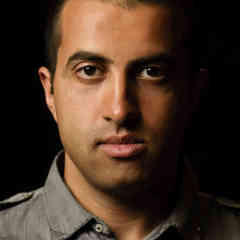
Mosab Hassan Yousef
Mosab Hassan Yousef

Mosab Hassan Yousef is a former Israeli-Palestinian informant who defected to Israel and became a double agent for the Israeli Mossad. Born in 1978, Yousef's father was a leader of the Palestinian Islamic Jihad. His story has been the subject of numerous books and documentaries. more

You May Also Like

“Many of the “scientific” or scholarly ideas about Jesus paraded in the media every Christmas and Easter are increasingly obsolete, based on assumptions, theories and unproven hypotheses that are, in some cases, more than a century old and which have been superseded by more recent research.”

“It takes a fantastic will to unbelief to suppose that Jesus never really ‘happened’, and more to suppose that he did not say the things recorded of him – so incapable of being ‘invented’ by anyone in the world at that time: such as ‘before Abraham came to be I am’ (John viii). ‘He that hath seen me hath seen the Father’ (John ix); or the promulgation of the Blessed Sacrament in John v: ‘He that eateth my flesh and drinketh my blood hath eternal life’. We must therefore either believe in Him and in what he said and take the consequences; or reject him and take the consequences. Letter 250 To Michael Tolkien”

“The quest for the historical Jesus, begun during the Enlightenment to purge the Gospels of "superstition" by subjecting them to critical reason, has since sought to situate him within his own time and place. That endeavor has proved troublesome. Historians depend on records, the best of which are produced contemporaneously with the events they relate, but most documentation about Jesus is neither collateral nor detailed. Although the Gospels offer abundant information and appear to contain primary-source material, they are not firsthand testimonies, and determining to what degree they may include unmediated reports about Jesus has generated substantial disagreement.”

“Accepting that the Gospels are problematic sources, we can still sketch Jesus's life and teachings. The evidence puts him among the Jewish peasantry of first-century Palestine. He was born ca. 4 BCE, more likely in or around Nazareth than in Bethlehem, given both widespread doubts about the historicity of Matthew's and Luke's Nativity narratives and recognition of their apologetic aims. He came from a family of modest means, spoke Aramaic, and worked as a carpenter or builder. At about age thirty, he was baptized by an itinerant preacher named John, after which he spent one (or more) years in the Galilee, gaining disciples and sometimes teaching in synagogues. By all accounts he moved easily among and displayed great compassion for people at society's margins. He fomented a major disturbance in Jerusalem, for which he was executed. Some of what Jesus taught was already familiar—the Golden Rule (Matt. 7:12) parallels a saying of the Jewish sage Hillel, his elder contemporary—but much represented a distinctive message about "the kingdom of God," a highly disputed term that many researchers understand as a place and time to come in which God will reign supreme. Heavenly or earthly, future or present, the kingdom would be ushered in by the "Son of Man," an apocalyptic figure whom Jesus may—or may not—have identified as himself. The kingdom's advent is imminent and would occasion a catastrophe, leading to a universal judgment of each person's fitness to enter it that would radically remake the social order. Mark 1:15 offers a concise precis: "The time is fulfilled, and the kingdom of God has come, repent, and believe the good news.”

“[Jesus's] concern for society's outcasts and his portrayals of the transformation wrought by the kingdom of God have helped cast him as a militant revolutionary, but he lived a generation before the Zealots, and his admonition that all who take the sword will "perish" by it (Matt 26:52) hardly intimates a rebel chieftain. Self-authorized preachers such as John the Baptist or Theudas, who professed that he could part the Jordan River, roamed first-century Palestine, and Jesus seems to fit this profile.”

“Though there’s simply no way to prove that no real Jesus ever existed [...], the closer you look for him the harder he is to see. When we search for what we think of as new innovations brought about by Jesus, invariably we find the same ideas have already come from some other source. He was a placeholder for all the values bestowed by all the other savior gods; he taught all the things Greek philosophers and Jewish Rabbis taught; he performed the same miracles, healings and resurrections the pagan magicians and exorcists did; in other words Jesus Christ was not a real person, but a synthesis of every cherished and passionate notion the ancient world came up with — noble truths, gentle wisdom, beloved fables, ancient attitudes, internal contradictions, scientific absurdities, intolerable attitudes and all. [...] We see indications that the first generation of Christianity began as a Jewish version of the Mystery Faiths, and that all the confused, contradictory ‘biographical’ information for Jesus stems from a deliberate allegory.”