Quotessence
Home / Quotes / Quote by Elena Ferrante

Quote by Elena Ferrante

“Everything about these times, I have to say, worries me, but that the majority of the human race - women, children, men - is subjected in various ways to the effects of inequality seems to me at the core of all the problems that consume us. Above all, inequality generates an extraordinary waste of minds and creative energies, which, if they were trained and put to use, would likely make our history an active laboratory for repairing the damage we’ve caused so far - or at least of controlling its effects, rather than an unbearable list of horrors. - from Incidental Inventions”

Quote by Elena Ferrante

Author
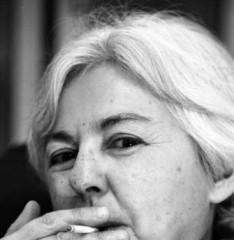
Elena Ferrante
Elena Ferrante

Elena Ferrante is a renowned contemporary Italian novelist, known for her unique narrative style and profound character portrayals. Her works cover a wide range of themes, including family, love, power, and social class. Ferrante's novels have received widespread acclaim both in Italy and around the world, despite the mystery surrounding her true identity. more

You May Also Like

“What is the people's one desire, when once it has been stung by the democratic tarantula? It is that all men should be equal, and in consequence that all inequalities natural as well as artificial should disappear. It will not have artificial inequalities, nobility of birth, royal favours, inherited wealth, and so it is ready to abolish nobility, royalty, and inheritance. Nor does it like natural inequalities, that is to say a man more intelligent, more active, more courageous, more skillful than his neighbors. It cannot destroy these inequalities, for they are natural, but it can neutralize them, strike them with impotence by excluding them from the employments under its control. Democracy is thus led quite naturally, irresistibly one may say, to exclude the competent precisely because they are competent, or if the phrase pleases better and as the popular advocate would put it, not because they are competent but because they are unequal, or, as he would probably go on to say, if he wished to excuse such action, not because they are unequal, but because being unequal they are suspected of being opponents of equality. So it all comes to the same thing. This it is that made Aristotle say that where merit is despised, there is democracy. He does not say so in so many words, but he wrote: "Where merit is not esteemed before everything else, it is not possible to have a firmly established aristocracy," and that amounts to saying that where merit is not esteemed, we enter at once on a democratic regime and never escape from it.”

“Solo al abrigo de aquella tapia protectora había arboles y frutas, flores, aromas, pájaros: después, todo cuanto rodeaba aquel lugar privilegiado se presentaba árido e inculto, todo tenía impreso el sello de la desolación y de la tristeza. Solo en los aristocráticos salones de aquella vivienda existían la riqueza y el lujo, el refinado gusto de la elegancia y todo lo que puede hacer soportable y aun querido un destierro. Fuera de allí, las casuchas que se hallaban diseminadas a corta distancia de aquel pequeño palacio, que parecía insultar osadamente la miseria que le rodeaba, eran de un aspecto lúgubre, llenas de pobreza y faltas de todo lo que puede hacer agradable la vida. Al mirarlas no podría menos de preguntarse uno a sí mismo si los que vivían en semejantes barracas tenían razón como nosotros, si eran hombres que pensaban y vivían y si, siendo así, no desesperaban de su suerte maldiciendo lo que todos los del universo deben maldecir.”

“The territorial aristocracy of past ages was obliged by law, or thought itself obliged by custom, to come to the help of its servants and relieve their distress. But the industrial aristocracy of our day, when it has impoverished and brutalized the men it uses, abandons them in time of crisis to public charity to feed them. ... In any event, the friends of democracy should keep their eyes anxiously fixed in that direction. For if ever again permanent inequality of conditions and aristocracy make their way into the world, it will have been by that door that they entered.”

“...a study of all 50 U.S. States found that those states marked out by large inequalities of power in terms of income and ethnicity had weaker environmental policies and suffered greater ecological degradation. Furthermore, one study covering 50 countries found the more unequal a country is, the more likely the biodiversity of its landscape is to be under threat.”

“The vast majority of states continue to withhold the right to vote when prisoners are released on parole. Even after the term of punishment expires, some states deny the right to vote for a period ranging from a number of years to the rest of one’s life. This is far from the norm in other countries—like Germany, for instance, which allows (and even encourages) prisoners to vote. In fact, about half of European countries allow all incarcerated people to vote, while others disqualify only a small number of prisoners from the polls. Prisoners vote either in their correctional facilities or by some version of absentee ballot in their town of previous residence. Almost all of the countries that place some restrictions on voting in prison are in Eastern Europe, part of the former Communist. No other country in the world disenfranchises people who are released from prison in a manner even remotely resembling the United States. In fact, the United Nations Human Rights Committee has charged that U.S. disenfranchisement policies are discriminatory and violate international law.”