Quotessence
Home / Quotes / Quote by Charles Bukowski

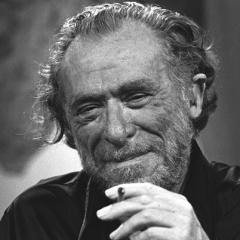
Quote by Charles Bukowski

“Where had they learned to converse and to dance? I couldn't converse or dance. Everybody knew something I didn't know. The girls looked so good, the boys so handsome. I would be too terrified to even look at one of those girls, let alone be close to one. To look into her eyes or dance with her would be beyond me. And yet I know that what I saw wasn't as simple and good as it appeared. There was a price to be paid for it all, a general falsity, that could be easily believed, and could be the first step down a dead-end street.”

Quote by Charles Bukowski

Work

Ham On Rye

Ham On Rye is a narrative that delves into the early life of its protagonist, detailing his struggles and experiences during a challenging period in American history. The story is a candid look at the hardships faced by a young boy in the 1930s, offering a glimpse into the resilience and determination required to overcome adversity. more

Author

Charles Bukowski
Charles Bukowski

Charles Bukowski, born on August 16, 1920, was an influential American poet. Known for his unique style and profound depiction of the lives of the underclass in America, he is considered one of the representatives of the Beat Generation. more

You May Also Like

“If you were alone when you were born, alone when you were dying, really absolutely alone when you were dead, why "learn to be alone" in between? If you had forgotten, it would quickly come back to you. Aloneness was like riding a bike. At gunpoint. With the gun in your own hand. Aloneness was the air in your tires, the wind in your hair. You didn't have to go looking for it with open arms. With open arms, you fell off the bike: I was drinking my wine too quickly.”

“At first the lives of women frightened me. They seemed so fragile, so dependent on fathers and husbands and brothers and lovers. Gradually, though, I noticed how supple their lives were beneath the surface. I saw, too, that sooner or later, by choice or by chance most women faced the task of adapting to a future on their own. When at my most optimistic, I thought of it as independence, in darker moods, as survival. Either way, women had to do it.”

“Is the invisible presence of the Christian fellowship a reality and a help to the individual? Is the Word of God close to him as a comfort and a strength? Or does he misuse his aloneness contrary to the fellowship, the Word, and the prayer? The individual must realize that his hours of aloneness react upon the community. In his solitude he can sunder and besmirch the fellowship, or he can strengthen and hallow it. Every act of self-control of the Christian is also a service to the fellowship. One who returns to the Christian family fellowship after fighting the battle of the day brings with him the blessing of his aloneness, but he himself receives anew the blessing of the fellowship. Blessed is he who is alone in the strength of the fellowship and blessed is he who keeps the fellowship in the strength of aloneness. But the strength of aloneness and the strength of the fellowship is solely the strength of the Word of God, which is addressed to the individual in the fellowship.”