“There are three kinds of constitution, and an equal number of deviation-forms--perversions, as it were, of them. The constitutions are monarchy, aristocracy, and thirdly that which is based on a property qualification, which it seems appropriate to call timocratic, though most people are wont to call it polity. The best of these is monarchy, the worst timocracy. The deviation from monarchy is tyranny; for both are forms of one-man rule, but there is the greatest difference between them; the tyrant looks to his own advantage, the king to that of his subjects. For a man is not a king unless he is sufficient to himself and excels his subjects in all good things; and such a man needs nothing further; therefore he will not look to his own interests but to those of his subjects; for a king who is not like that would be a mere titular king. Now tyranny is the very contrary of this; the tyrant pursues his own good. And it is clearer in the case of tyranny that it is the worst deviation-form; but it is the contrary of the best that is worst. Monarchy passes over into tyranny; for tyranny is the evil form of one-man rule and the bad king becomes a tyrant. Aristocracy passes over into oligarchy by the badness of the rulers, who distribute contrary to equity what belongs to the city-all or most of the good things to themselves, and office always to the same people, paying most regard to wealth; thus the rulers are few and are bad men instead of the most worthy. Timocracy passes over into democracy; for these are coterminous, since it is the ideal even of timocracy to be the rule of the majority, and all who have the property qualification count as equal. Democracy is the least bad of the deviations;”
Quote by Aristotle
Book:Nicomachean Ethics
Work
Nicomachean Ethics
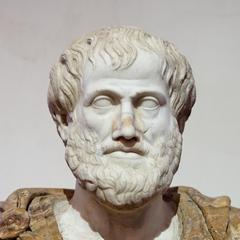
Written by Aristotle, this text delves into the nature of ethical conduct and the role of virtue in human life, offering insights into the principles of moral reasoning and character development. more
Author
You May Also Like
Source: Billions & Billions: Thoughts on Life and Death at the Brink of the Millennium
Source: SO MAN CREATED GOD IN HIS OWN IMAGE: The Science of Happiness
Source: On Inhumanity: Dehumanization and How to Resist It
Source: On Inhumanity: Dehumanization and How to Resist It
“La tiranía siempre fracasa cuando a la gente no le queda nada mas que perder que sus vidas”
Source: Darkdawn
Source: The Moral Animal: Why We Are the Way We Are - The New Science of Evolutionary Psychology
Source: The Noise of Time
Source: The Noise of Time