Quotessence
Home / Quotes / Quote by Philip K. Dick

Quote by Philip K. Dick

“On one hand she seems so agile, so athletic, and yet I've seen her appear so awkward that it embarrassed me. She gives the impression of a hard, worldly adroitness, and in some situations she's like an adolescent: rigid with ancient, middle class attitudes, unable to think for herself, falling back on old verities...victim of her family teaching, shocked by what shocks people, wanting what people usually want. She wants a home, a husband, and her idea of a husband is a man who earns a certain amount of money, helps around the garden, does the dishes...the idea of a good husband that's found in This Week magazine; a viewpoint from the most ordinary stratum, that great ubiquitous world of family life, transmitted from generation to generation. Despite her wild language.”

Quote by Philip K. Dick

Work

Confessions of a Crap Artist

This book delves into the personal journey of an individual striving to make a name for themselves in the art world, navigating the complexities of creativity and the challenges of artistic expression. more

Author
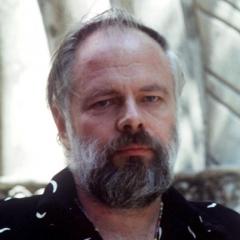
Philip K. Dick
Philip K. Dick

Philip K. Dick was an American science fiction novelist known for his unique philosophical thinking and profound futuristic imagination. His works often explore the boundaries between individuals and society, reality and illusion, and have had a profound impact on science fiction literature. more

You May Also Like

“Я окончательно проясню смысл термина, сказав, что, например, сегодня в коммунистической России советская литература, советское искусство, советская музыка, советские идеалы основательно и нудно буржуазны. За железным — занавес тюлевый. Советский чиновник, крупный или мелкий, — воплощение буржуазного духа, мещанства. Ключ к флоберовскому термину — мещанство господина Омэ.”

“Now, who, according to Rousseau, is the bourgeois? Most simply, following Hegel's formula, he is the man motivated by fear of violent death, the man whose primary concern is preservation or comfortable preservation. Or, to de scribe the inner workings of his soul, he is the man who, when dealing with others, thinks only of himself, and, in his understanding of himself, thinks only of others. He is a role-player. The bourgeois is contrasted by Rousseau, on the one hand, with the natural man, who is whole and simply concerned with himself, and with the citizen, on the other, whose very being consists in his relation to his city, who understands his good to be identical with the common good. The bourgeois distinguishes his own good from the common good, but his good requires society, and hence he exploits others while depending on them. He must define himself in relation to them. The bourgeois comes to be when men no longer believe that there is a common good, when the notion of the father land decays. Rousseau hints that he follows Machiavelli in attributing this decay to Christianity, which promised the heavenly fatherland and thereby took away the supports from the earthly fatherland, leaving social men who have no reason to sacrifice private desire to public duty.”

“Yes, all you French workers have that one idea: you want to dig up a treasure and live on it for evermore in selfish and lazy isolation. You make a great song against the rich, but when fortune give you some money you haven't the guts to give it back to the poor. You will never deserve to be happy so long as you have personal possessions, and your hatred of the bourgeois simply comes from your mad desire to be bourgeois yourselves in their place!”

“Knighthood became an anachronism not because its weapons, but because its ‘idealism’ and irrationalism had become out of date. The knight did not understand the motive forces behind the new economy, the new society and the new state; he still persisted in regarding the middle class with its money and ‘narrow-minded’ commercial outlook as an anomaly. The men of the middle class knew much better where they stood with the knights. It amused them to join in the masquerade of the knightly tournaments and the ‘courts of love’, but they treated all such activities as mere sport; in their business activities they remained hard-headed and free from illusions in a world which was the very opposite of chivalrous.”

“Richardson' moralizing novels contain the germ of the most immoral art that has ever existed, namely the incitement to indulge in those wish-fantasies in which decency is only a means to an end, and the inducement to occupy oneself to mere illusions instead of striving for the solution of the real problems of life. They also, for that reason, denote one of the most important dividing lines in the history of modern literature; previously the works of an author were either really moral or immoral, but since his time the books which want to appear moral in most cases merely moralize. In the struggle against the upper classes the bourgeois loses his innocence, and as he has to emphasize his virtue all too often, he becomes a hypocrite.”

“Finally, to say that "the most favourable condition for wage. labour is the fastest possible growth of productive capital," is the same as to say: the quicker the working class multiplies and augments the power inimical to it—the wealth of another which lords it over that class—the more favourable will be the conditions under which it will be permitted to toil anew at the multiplication of bourgeois wealth, at the enlargement of the power of capital, content thus to forge for itself the golden chains by which the bourgeoisie drags it in its train.”