“Indeed, it is this threefold character of man—the fact that through his spiritual intellect, which is so much more than merely rational, he has an affinity with the divine, while with his body he is linked to the material world—that gives him such a key position and role in the universe. He stands between God and the material world, between heaven and earth. In the old formula, he is the microcosm.' In fact, all things in creation have their meeting-place in man, and man is potentially all things. Properly seen, nothing is external to him. This is in contradistinction to the modern scientific view of things, which presupposes precisely that man does regard the world of nature as an object external to himself. It presupposes a loss of that consciousness in which nature is seen as part of his own subjectivity, as the living garment of his own inner being. Consequently man has also lost the sense of his role in relationship to the rest of creation. Displacing himself from nature, depersonalizing and objectifying it, he has destroyed the harmony and reciprocity that should exist between them.”
Quote by Philip Sherrard
Work
The Rape of Man & Nature: An Inquiry Into the Origins and Consequences of Modern Science
Browse quotes and source details for this work. more
Author
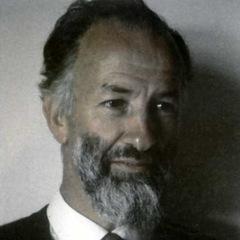
Philip Sherrard
Philip Sherrard was a British author known for his profound exploration of religion, philosophy, and mysticism. His works covered a wide range of subjects, including novels, poetry, and criticism. more
You May Also Like
Source: The Rape of Man & Nature: An Inquiry Into the Origins and Consequences of Modern Science
Source: The Rape of Man & Nature: An Inquiry Into the Origins and Consequences of Modern Science
Source: The Rape of Man & Nature: An Inquiry Into the Origins and Consequences of Modern Science
Source: The Rape of Man & Nature: An Inquiry Into the Origins and Consequences of Modern Science
Source: Betrayal of Faith
Source: The Rape of Man & Nature: An Inquiry Into the Origins and Consequences of Modern Science
Source: The Rape of Man & Nature: An Inquiry Into the Origins and Consequences of Modern Science
Source: The Rape of Man & Nature: An Inquiry Into the Origins and Consequences of Modern Science
Source: The Rape of Man & Nature: An Inquiry Into the Origins and Consequences of Modern Science