Quotessence
Home / Quotes / Quote by Philip Sherrard

Quote by Philip Sherrard

“God’s enhumanization has not only ‘taken manhood into God’; it has also taken the whole created world into God, has resurrected it and transfigured it in its very depths. It is only man’s continuing alienation from the ground of his being that prevents him from realizing this, that throws a veil of opacity between God and man, God and the world, an keeps them in a state of false division and disunity. Correspondingly, it is through overcoming this alienation, and through remaking himself in the image and likeness of the divine that is at the heart of his own subjective life and that confers on him his unique quality as a person, that he shares in the priesthood of Christ and in that sacrament of love and beauty in which all things, released from their bondage, live, move and have their being. Outside this relationship, apart from this sacrament, man has no real place in the world, or the world in him. He is but a tormented shadow of himself, and his world a forsaken wilderness, and on both he is compelled to seek ever further revenge for that crime against his own nature which he refuses to acknowledge, still more to expiate.”

Quote by Philip Sherrard

Work

Author

Philip Sherrard
Philip Sherrard

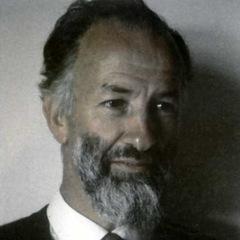
Philip Sherrard was a British author known for his profound exploration of religion, philosophy, and mysticism. His works covered a wide range of subjects, including novels, poetry, and criticism. more

You May Also Like

“This is why the gradual erosion of the significance of the Incarnation over the last centuries (to the point to which the whole idea of it appears to some to be virtually superfluous where Christian doctrine is concerned) has meant the erosion of the true significance of man as artist. Man has lost his sense of his role as mediator between God and the world; he has lost his sense that the forms of his art should mirror the divine and that unless his work possesses this sacramental quality it will be as vacuous and ugly as most of the articles which now surround our daily lives, public and private. A social order which deprives man and his practices of their sacramental quality is already dead, no matter what frenetic activity it may appear to manifest.”

“He has more or less eliminated the idea of God-manhood from his mind. Having rejected the understanding that his life and activity are significant only in so far as they incarnate, reflect and radiate that transcendent spiritual reality which is the ground and centre of his own being, he is condemned to believe that he is the autocratic and omnipotent ruler of his own affairs and of the world about him, which it is his right and duty to subdue, organize, investigate and exploit to serve his profane mental curiosity or his acquisitive material appetites. The deification of man as a fallen mortal entity has led, as we are only too well aware, to the most extreme forms of cruelty and rapacity, forms which deny the unique and absolute value of the human person and of every other created reality. The assertion that man is merely human has resulted in a dehumanization possibly without parallel in the history of the world.”

“One has to judge things by their fruits. And one of the fruits of modern science, clear for all to see, and implicit in the philosophy on which it is based, is the dehumanization both of man and of the society that he has built in its name.”

“The world-picture, with man in it, is flattened and neutralized, stripped of all sacred or spiritual qualities, of all hierarchical differentiation, and spread out before the human observer like a blank chart on which nothing can be registered except what is capable of being measured. For Newton, the celestial spheres are a machine, for Descartes, animals are machines, for Hobbes, society is a machine, for La Mettrie, the human body is a machine, eventually for Pavlov and his successors human behaviour is like that of a machine. There is nothing that is not reduced either to phenomenon (fact) or to mathematical hypothesis (or, in less polite language, fiction). The whole physical world is regarded as no more than so much inanimate dead matter whose chemical changes are mechanical processes based upon the so-called law of the conservation of mass. Everything, including the mind of man," is aligned on the model of a machine constructed out of dissections, analyses and calculations.”

“Already by the first half of the nineteenth century, if not earlier, scientists—and especial] scientists who would apply their knowledge—were beginning to move into the centre of the social and economic scene. Aided and abetted by hard-headed industrialists and bankers possessed by a single-minded devotion to making money no matter what devastation they produced, scientists began to turn their expertise to the practical exploitation of the world’s natural resources. It must be remembered, too, that they rode on the crest of the new ‘spirit of the age’. There was a feeling of optimism in the air, a sense of moving forward into the future under the aegis of a new divinity, the Reason, that was now extending its empire over the whole western consciousness. Man was naturally good. The world was a good place to live in. It could be a much better place if only its natural resources and man’s ability to put them to his use could be exploited more fully and efficiently.”

“If efficient technical means for achieving something exist or can be produced, then these means must be put into action irrespective of what this thing is or of what the cost may be in human terms. Even those who were at first the victims of these processes—the industrial proletariat—have been seduced by their glamour and regard them as the magical talisman that will bring them all they need in life. As for the elite of our technocracy—those who manipulate its inexhaustible gadgetry of machines, devices, techniques, the computers and cybernated systems, the simulation and gaming processes, the market and motivational research, the immense codifications necessary to sustain and enlarge their empire of sterilized artificiality—their prestige is virtually unassailable because on them the whole edifice depends for its survival and prosperity. Moreover, if they are readers of Teilhard de Chardin, they can add ideological grist to their pragmatic mill, for he will have taught them that it is through the consolidation of the ‘noosphere’, that level of existence permanently dominated by the mind of man and its planning, that our species will execute its God-given task and fulfill its destiny.”

“Moreover, it is not only our emotional world that is deadened. The world of our creative imagination and intelligence is also impoverished. The most average characterless type of mind is quite sufficient to master and apply the various skills, scientific and other, needed to run our society.At the same time, the objects which we now make or manufacture require little or no imaginative effort on our part; they are all the result of rational planning and design, of technical skill and efficiency, and we produce them—are forced to produce them—with the least possible personal struggle or commitment, entering into and becoming through producing them part of their objective, impersonal and pitiless nature. For these products—machines, commodities, organizations, programmes—are themselves totally devoid of any Imaginative quality: they mirror nothing which is not material, they are symbols of nothing, they are entirely consumed by their own lifeless and inorganic indifference; and man who must spend his days among them is reduced to a similar state. Indeed, what goes by the name of work for the vast majority of the members of our society rots the very soul and body. It is work which takes no account whatsoever of the personal qualities of the individuals engaged in it; it has no direct connection with what a particular person really is or with that by virtue which he is himself and not someone else; it is purely external to him and he can exchange it—if there is anything available—for an alternative which is equally impersonal and exterior. In relation to our work, the vast majority of us in our society are equivalent to mere ‘units’, or objects or commodities, and are condemned for all our wokring lives to purely mechanical activites in which nothing properly human exists and whose performance is not in any way consistent with our inner and personal aptitudes and identities.”

“The result has been that theologians have largely failed to make any radical or effective critique of scientific epistemology, to elucidate the consequences of making the reason the supreme and sole instrument of knowledge, and to explain why this has meant a progressive falsification of our understanding both of ourselves and of the world about us. In view of this failure it is not surprising that so many students of our universities end up with no better ideology than some form of Marxist-Leninism, itself a translation into political terms of some of the most banal aspects of nineteenth century bourgeois scientific theory. When this same hotch-potch of rationalist-materialist constructs is taken over by—or, rather, takes possession of—the masses, then society is turned into a prison-camp in which everything that gives human life its value and dignity is systematically attacked and lacerated.”

“...we demean ourselves and our potentialities When we take an unrelievedly pessimistic view of our fate. Yet equally we demean ourselves when we nourish ourselves on illusions. The social and cultural order that we have built and are continuing to build about us—our present—is one predominantly determined by the categories of a false philosophy and its practical application; and the consequence of our acquiescence on such a mass scale to what amounts to a lie about ourselves and the true nature of the physical world cannot but be an increasing divorce between this order and that of the human and natural norm. In fact, this divorce has now become so great that it is virtually impossible for the one to understand the other. We have all but lost the capacity to measure how far we have in fact fallen below the level of the human and natural norm.”