Quotessence
Home / Quotes / Quote by Philip Sherrard

Quote by Philip Sherrard

“...we demean ourselves and our potentialities When we take an unrelievedly pessimistic view of our fate. Yet equally we demean ourselves when we nourish ourselves on illusions. The social and cultural order that we have built and are continuing to build about us—our present—is one predominantly determined by the categories of a false philosophy and its practical application; and the consequence of our acquiescence on such a mass scale to what amounts to a lie about ourselves and the true nature of the physical world cannot but be an increasing divorce between this order and that of the human and natural norm. In fact, this divorce has now become so great that it is virtually impossible for the one to understand the other. We have all but lost the capacity to measure how far we have in fact fallen below the level of the human and natural norm.”

Quote by Philip Sherrard

Work

Author

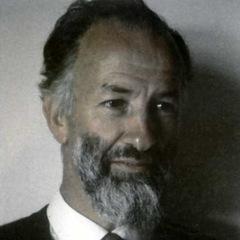
Philip Sherrard
Philip Sherrard

Philip Sherrard was a British author known for his profound exploration of religion, philosophy, and mysticism. His works covered a wide range of subjects, including novels, poetry, and criticism. more

You May Also Like

“Modern science, then, ignoring the sacred aspect of nature as a condition of its own genesis and development, tries to fill the vacuum it has created by producing mathematical schemes whose only function is to help us to manipulate and ‘dominate’ matter on its own plane, which is that of quantity alone. The physical world, regarded as so much dead stuff, becomes the scene of man’s uncurbed exploitation for purely practical, utilitarian or acquisitive ends. It is treated as a de-incarnate world of phenomena that are without interest except in so far as they subserve statistics or fill test-tubes in order to satisfy the curiosity of the scientific mind, or are materially useful to man considered as a two-legged animal with no destiny beyond his earthly existence.”

“The technical term that is often used for this is “interpersonally exploitative.” In short, because of the singular focus on fulfilling their needs, especially external needs, narcissists will use other people as objects to get those needs met. Other people often do serve literally as objects—a tool to get a job done. Because you are not in on this secret in the beginning, it can feel a bit depersonalizing—as though you are only valued when you are functional. It can feel manipulative, because your partner may compliment you excessively and then hit you with a difficult request or ask you to make uncomfortable requests.”

“It’s hard to feel supported when you can’t tell people everything. People haven’t really got a clue what it’s like. It’s hard to trust anyone. It’s hard to believe people won’t let you down. I’m feeling like I want to cry. My body feels hollow. Empty. I don’t feel like I’m 17. I feel young. I’m not sure how old, maybe about 10 yrs. It’s hard to accept that I can’t get all the support I need from one person. From any person. It’s hard that no one can fully understand. It’s hard for me to admit that inside I feel a really lonely person. What do I need to do to take care of myself right now? Well I need to cuddle my teddies — it sounds silly, but I need some comfort... I was still cuddling teddies when I should have been cuddling boys. The sick imagery in my mind, rather than making me sexually active, had closed that door completely.”

“Another patient, Janet, was repeatedly abused by a grandfather who forced her cousin to sexually molest her and put sticks into her vagina. The patient dissociated at the time into a child alter personality, Susie, who remembered the abuse. Susie decided if she had no body, her cousin would not hurt her. Susie imagined she had no body but only her head. The fantasy she had no body to hurt, led to a dissociation of all perceptions of her body and the belief that she avoided pain and her cousin could not hurt her. This mechanism shows the interplay of reality and fantasy in a dissociative defense. Through fantasy, Susie has no body and no pain. Simultaneously, the reality of her torture was recognized as the source of this adaptation. Dissociative defenses adopted her wishful fantasy to solve a brutal experience and its memory.”

“What is it, sweetie," I asked. "Hair, said a voice that wasn't Missy's. It was Little Joe, a two-year-old personality, and his fingers played in my waist-length hair just as my own babies had many years ago. My skin prickled as I realized how complete my experience was of being touched by a toddler.”