Quotessence
Home / Quotes / Quote by Howard Zinn

Quote by Howard Zinn

“The essential ingredients of these struggles for justice are human beings who, if only for a moment, if only while beset with fears, step out of line and do "something", however small. And even the smallest, most unheroic of acts adds to the store of kindling that may be ignited by some surprising circumstance into tumultuous change.”

Quote by Howard Zinn

Author
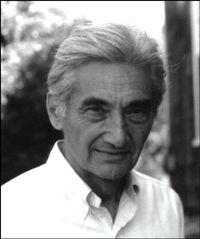
Howard Zinn
Howard Zinn

American historian known for his critical analysis of historical events and advocacy for social justice. His work emphasizes the connection between history and contemporary social issues, particularly focusing on the role of ordinary people in the historical process. more

You May Also Like

“You just try to get through the day. The small stuff—waiting on a bus, eating, having a simple conversation—is too much to bear, and you fight to make it through the next minute without screaming. You look around at people going about their day—smiling, laughing, having meaningless encounters and conversations as if living was effortless, and you curse yourself and your mind and you wonder if someday things will get easier, and you become terrified of what will happen if they don’t.”

“He thought about the loss of humanity that was eating away at the world and the loss of the connection to the self that ate away at the consciousness which animated all into being. He thought about how the collective psyche was teetering on that knife’s edge between a desperation to live and a desperation to die. And here he was at the cusp of it himself.”

“Addicts of attrition," as Simpkin calls them, generally cannot think beyond the battle, and they consider that the only way--or at least the preferred way--to defeat an enemy is to destroy the physical components of his army, especially the combat portions (armored fighting vehicles, troops, guns, etc.). If the attrition addict appreciates war's intangibles at all (such as morale, initiative, and shock), he sees them only as combat multipliers with which to fight the attrition battle better. If the attrition warrior learns about maneuver, he sees it primarily as a way to get to the fight. In other words, he moves in order to fight. Maneuver theory, on the other hand, attempts to defeat the enemy through means other than simple destruction of his mass. Indeed, the highest and purest application of maneuver theory is to preempt the enemy, that is, to disarm or neutralize him before the fight. If such is not possible, the maneuver warrior seeks to dislocate the enemy forces, i.e., removing the enemy from the decisive point, or vice versa, thus rendering them useless and irrelevant to the fight. If the enemy cannot be preempted or dislocated, then the maneuver-warfare practitioner will attempt to disrupt the enemy,i.e., destroy or neutralize his center of gravity, preferably by attacking with friendly strengths through enemy weaknesses.”