Quotessence
Home / Quotes / Quote by Michael Chabon

Quote by Michael Chabon

“I thought I smelled an early hint of the mysterious bittersweet gas that fills Pittsburgh in the summertime, a smell at once industrial and aboriginal, river water and sulfur dioxide, burning tires and the coat of a fox.”

Quote by Michael Chabon

Work

Wonder Boys

Set in the world of literature and academia, the story delves into themes of identity, ambition, and the creative process. The protagonist, a middle-aged writer, navigates his own personal struggles while attempting to mentor a young man who has become a source of inspiration and complication in his life. more
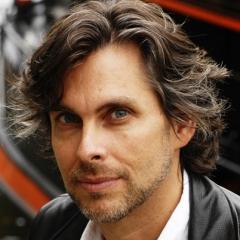
Author

Michael Chabon
Michael Chabon

Michael Chabon is an American author known for his rich imagination and unique narrative style. His works span various literary genres, including novels, short story collections, and children's literature. Chabon's notable works include 'The Amazing Adventures of Kavalier & Clay', 'The Yiddish Policemen's Union', and 'The Mysteries of Pittsburgh', which have won him widespread acclaim and numerous literary awards. more

You May Also Like

“Summer in Pittsburgh had a way of hating you, had a way of beating you down, getting into your bones and thoughts. Only the strongest survived the humidity of Pittsburgh summers, until winter came on and brought with it a test of a different sort, to see who was strong enough to make it to summer. All weather in Pittsburgh had an attitude, forced you to submit to it. Dared you to survive.”

“You can be anything in Pittsburgh, a stripper, a writer, a student, a bartender, or something else, or everything else, all of it at once, and no one cares, or if they care, they mean it, it's love. In Pittsburgh, you are tough or you are not. You write or you don't write. You start hearts or allow hearts to wind down like old clocks. I almost never think about what Pittsburgh means because I know it.”

“I was flying. My shoulders loosened, my stride opened, my heart banged the base of my throat. I crossed Carnegie and ran up the block waving my arms. I crossed Lexington and ran up the block waving my arms. A linen-suited woman in her fifties did meet my exultant eye. She looked exultant herself, seeing me from far up the block. Her face was thin and tanned. We converged. Her warm, intelligent glance said she knew what I was doing- not because she herself had been a child but because she herself took a few loose aerial turns around her apartment every night for the hell of it, and by day played along with the rest of the world and took the streetcar. So Teresa of Avila checked her unseemly joy and hung on to the altar rail to hold herself down. The woman's smiling, deep glance seemed to read my own awareness from my face, so we passed on the sidewalk- a beautifully upright woman walking in her tan linen suit, a kid running and flapping her arms- we passed on the sidewalk with a look of accomplices who share a humor just beyond irony. What's a heart for?”

“The old frame house down near the waterfront had never held so many people since the day it was put up. It must have been a pleasant place fifty years before: trees overhanging the limpid water, cows grazing in the meadows on both sides of the river, little frame houses like this one dotting the banks here and there. It wasn't a pleasant place any more: garbage scows, coal yards, the river a greasy gray soup. Dead-end blocks of decrepit tenements on one side of it, lumberyards and ice-plants and tall stacks on the other. The house was set far back from the street, hemmed in by the blank walls that rose around it. ("I Wouldn't Be In Your Shoes")”

“The little car was soon free of the city, for the smear of suburbia that had once lain along the western highways for miles was gone. During the Plague Years of the eighties, when in some areas not one person in twenty remained alive, the suburbs were not a good place to be. Miles from the supermart, no gas for the car, and all the split-level ranch homes around you full of the dead. No help, no food. Packs of huge status-symbol dogs—Afghans, Alsatians, Great Danes—running wild across the lawns ragged with burdock and plantain. Picture window cracked. Who’ll come and mend the broken glass? People had huddled back into the old core of the city; and once the suburbs had been looted, they burned. Like Moscow in 1812, acts of God or vandalism: they were no longer wanted, and they burned. Fireweed, from which bees make the finest honey of all, grew acre after acre over the sites of Kensington Homes West, Sylvan Oak Manor Estates, and Valley Vista Park.”