Quotessence
Home / Authors / Cornell Woolrich
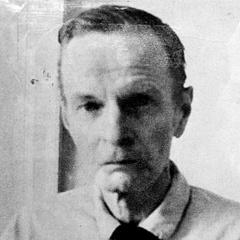
Cornell Woolrich

Cornell Woolrich Quotes

Novelist

Filter quotes by topic

Famous Cornell Woolrich Quotes

“Home? What is home? Home is where a house is that you come back to when the rainy season is about to begin, to wait until the next dry season comes around. Home is where your woman is, that you come back to in the intervals between a greater love - the only real love - the lust for riches buried in the earth, that are your own if you can find them. Perhaps you do not call it home, even to yourself. Perhaps you call them 'my house,' 'my woman,' What if there was another 'my house,' 'my woman,' before this one? It makes no difference. This woman is enough for now. Perhaps the guns sounded too loud at Anzio or at Omaha Beach, at Guadalcanal or at Okinawa. Perhaps when they stilled again some kind of strength had been blasted from you that other men still have. And then again perhaps it was some kind of weakness that other men still have. What is strength, what is weakness, what is loyalty, what is perfidy? The guns taught only one thing, but they taught it well: of what consequence is life? Of what consequence is a man? And, therefore, of what consequence if he tramples love in one place and goes to find it in the next? The little moment that he has, let him be at peace, far from the guns and all that remind him of them. So the man who once was Bill Taylor has come back to his house, in the dusk, in the mountains, in Anahuac. ("The Moon Of Montezuma")”

“Crazy thoughts without logic took turns slashing at me. “Why do they get you to learn to love them, if this is how they’re going to treat you after you do? Why do they come around you when you’re seventeen and aren’t doing anything to them, are just minding your own business, getting along all right without them, if this is how they’re going to act when you’re twenty-two? Why don’t they leave you alone?” I sobbed deep inside where it couldn’t be heard. “Why don’t they leave you alone if they don’t mean it?”

“Lew had never seen a dead man before. He just stood there, and looked and looked. Then he went a step closer, and looked some more. 'So that's what it's like!' he murmured inaudibly. Finally Lew reached out slowly and touched him on the face, and cringed as he met the clammy feel of it, pulled his hand back and whipped it down, as though to get something off it. The flesh was still warm and Lew knew suddenly he had no time alibi. He threw something over that face and that got rid of the awful feeling of being watched by something from the other world. After that Lew wasn't afraid to go near him; he just looked like a bundle of old clothes. The dead man was on his side, and Lew fiddled with the knife-hilt, trying to get it out. It was caught fast, so he let it alone after grabbing it with his fingers from a couple of different directions. Next he went through his pockets, thinking he'd be helping to identify him. The man was Luther Kemp, forty-two, and he lived on 79th Street. But none of that was really true any more, Lew thought, mystified; he'd left it all behind. His clothes and his home and his name and his body and the show he'd paid to see were here. But where the hell had he gone to, anyway? Again that weird feeling came over Lew momentarily, but he brushed it aside. It was just that one of the commonest things in life - death - was still strange to him. But after strangeness comes familiarity, after familiarity, contempt. ("Dusk To Dawn")”

“I went in and started to get dressed. Dressed for calling, that is. I took more pains dressing for her than I ever had dressing for him. And yet he was the one I was dressing for, in a roundabout way. I had to be careful. Enemy eyes. Finally I was ready and I got out fast. I knew if I didn't go quickly I'd never have the nerve to go at all. The two jiggers of gin were wearing off, so I stopped just long enough to gulp a third and last to see me through. Then I went out and closed the door behind me, and for the first time in four years I didn't give a damn what there was going to be for supper.”

“She turned and walked down the musty, dimly-lighted corridor, along a strip of carpeting that still clung together only out of sheer stubbornness of skeletal weave. Doors, dark, oblivious, inscrutable, sidling by; enough to give you the creeps just to look at them. All hope gone from them, and from those who passed in and out through them. Just one more row of stopped-up orifices in this giant honeycomb that was the city. Human beings shouldn't have to enter such doors, shouldn't have to stay behind them. No moon ever entered there, no stars, no anything at all. They were worse than the grave, for in the grave is absence of consciousness. And God, she reflected, ordered the grave, for all of us; but God didn't order such burrows in a third-class New York City hotel.”

“And I still say it was just a coincidence;' he muttered pugnaciously. 'You say it too! Look at me and say it! It was just a coincidence. That happened to be the nearest place on the dial where they both met exactly, those two hands. My blows dented them. They got stuck there just as the works died, that was all. Stay sane whatever you do. Say it over and over. It was just a coincidence!' Outside the tall French windows, in the velvety night-sky, the stars in all their glory twinkled derisively in at them. ("Speak To Me Of Death")”

“I took a few dragging steps toward the locker-room door. 'You're doing something to me that I wouldn't do to a dog,' I mumbled. 'What you're doing to me is worse than if you were to kill me. You're locking me up in shadows for the rest of my life. You're taking my mind away from me. You're condemning me slowly but surely to madness, to being without a mind. It won't happen right away, but sooner or later, in six months or in a year - Well, I guess that's that.' I fumbled my way out of the locker room and down the passageway outside, guiding myself with one arm along the wall, and past the sergeant's desk and down the steps, and then I was out in the street. ("All At Once, No Alice")”

“An attachment grew up. What is an attachment? It is the most difficult of all the human interrelationships to explain, because it is the vaguest, the most impalpable. It has all the good points of love, and none of its drawbacks. No jealousy, no quarrels, no greed to possess, no fear of losing possession, no hatred (which is very much a part of love), no surge of passion and no hangover afterward. It never reaches the heights, and it never reaches the depths. As a rule it comes on subtly. As theirs did. As a rule the two involved are not even aware of it at first. As they were not. As a rule it only becomes noticeable when it is interrupted in some way, or broken off by circumstances. As theirs was. In other words, its presence only becomes known in its absence. It is only missed after it stops. While it is still going on, little thought is given to it, because little thought needs to be. It is pleasant to meet, it is pleasant to be together. To put your shopping packages down on a little wire-backed chair at a little table at a sidewalk cafe, and sit down and have a vermouth with someone who has been waiting there for you. And will be waiting there again tomorrow afternoon. Same time, same table, same sidewalk cafe. Or to watch Italian youth going through the gyrations of the latest dance craze in some inexpensive indigenous night-place-while you, who come from the country where the dance originated, only get up to do a sedate fox trot. It is even pleasant to part, because this simply means preparing the way for the next meeting. One long continuous being-together, even in a love affair, might make the thing wilt. In an attachment it would surely kill the thing off altogether. But to meet, to part, then to meet again in a few days, keeps the thing going, encourages it to flower. And yet it requires a certain amount of vanity, as love does; a desire to please, to look one's best, to elicit compliments. It inspires a certain amount of flirtation, for the two are of opposite sex. A wink of understanding over the rim of a raised glass, a low-voiced confidential aside about something and the smile of intimacy that answers it, a small impromptu gift - a necktie on the one part because of an accidental spill on the one he was wearing, or of a small bunch of flowers on the other part because of the color of the dress she has on. So it goes. And suddenly they part, and suddenly there's a void, and suddenly they discover they have had an attachment. Rome passed into the past, and became New York. Now, if they had never come together again, or only after a long time and in different circumstances, then the attachment would have faded and died. But if they suddenly do come together again - while the sharp sting of missing one another is still smarting - then the attachment will revive full force, full strength. But never again as merely an attachment. It has to go on from there, it has to build, to pick up speed. And sometimes it is so glad to be brought back again that it makes the mistake of thinking it is love. ("For The Rest Of Her Life")”

“But it doesn't happen that way, I keep telling myself knowingly and sadly. Only in our fraternity pledges and masonic inductions, our cowboy movies and magazine stories, not in our real-life lives. For, the seventeenth-century humanist to the contrary, each man is an island complete unto himself, and as he sinks, the moving feet go on around him, from nowhere to nowhere and with no time to lose. The world is long past the Boy Scout stage of its development; now each man dies as he was meant to die, and as he was born, and as he lived: alone, all alone. Without any God, without any hope, without any record to show for his life. ("New York Blues")”

“Fear! Fear again, for the first time since his 'teens. Fear, that he thought he would never know any more. Fear that no weapon, no jeopardy, no natural cataclysm, has ever been able to inspire until now. And now here it is running icily through him in the hot Chinese noon. Fear for the thing he loves, the only fear that can ever wholly cow the reckless and the brave. ("Jane Brown's Body")”

“She had signed her own death-warrant. He kept telling himself over and over that he was not to blame, she had brought it on herself. He had never seen the man. He knew there was one. He had known for six weeks now. Little things had told him. One day he came home and there was a cigar-butt in an ashtray, still moist at one end, still warm at the other. There were gasoline-drippings on the asphalt in front of their house, and they didn't own a car. And it wouldn't be a delivery-vehicle, because the drippings showed it had stood there a long time, an hour or more. And once he had actually glimpsed it, just rounding the far corner as he got off the bus two blocks down the other way. A second-hand Ford. She was often very flustered when he came home, hardly seemed to know what she was doing or saying at all. He pretended not to see any of these things; he was that type of man, Stapp, he didn't bring his hates or grudges out into the open where they had a chance to heal. He nursed them in the darkness of his mind. That's a dangerous kind of a man. If he had been honest with himself, he would have had to admit that this mysterious afternoon caller was just the excuse he gave himself, that he'd daydreamed of getting rid of her long before there was any reason to, that there had been something in him for years past now urging Kill, kill, kill. Maybe ever since that time he'd been treated at the hospital for a concussion. ("Three O'Clock")”

“After that there was silence for a while, only the sound of the shovel biting into the earth and the hissing splatter of the loose dirt. They stood him up, his back to the well. In the dark, desperate sky, just above the scalloped line the treetops made, three stars formed a pleading little constellation. No one looked at them, no one cared. This was the time for death, not the time for mercy. ("The Number's Up")”

“Here the first of the things that happened, happened. The first of the things important enough to notice and to remember afterward, among a great many trifling but kindred ones that were not. Some so slight they were not more than gloating, zestful glints of eye or curt hurtful gestures. (Once he accidentally poured a spurt of scalding tea on the back of a waitress' wrist, by not waiting long enough for the waitress to withdraw her hand in setting the cup down, and by turning his head momentarily the other way. The waitress yelped, and he apologized, but he showed his teeth as he did so, and you don't show your teeth in remorse).”

“Oh, I need help—Bernice, Bernice. The touch of your hand on my face is telegraphed all over me. Can’t you see I’m half-crazed? You’ve got to get me out of this state—” She laughed a little, and then she said, “How am I to blame? It’s in you, and in all of them, to torture the life out of some poor girl. And because you came across me, you react like a caged chimpanzee, and then try to tell me I got you into the state you’re in. That's a laugh!”

“The honky-tonk bartender, who doubled as bouncer, waiter, and cashier, was in no mood to compromise. Mercy was not in him. He came out around the open end of the long counter, waddled threatening across the floor in a sullen, red-faced fury and began to shake the inanimate figure lying across the table with its head bedded on its arms. "Hey, you! Do your sleeping in the gutter!" If you gave these bums an inch; they took a yard. And this one was a particularly glaring example of the genus bar-fly. He was in here all the time like this, inhaling smoke and then doing a sunset across the table. He'd been in here since four this afternoon. The boss and he, who were partners in the joint - the bartender called it jernt - would have been the last ones to claim they were running a Rainbow Room, but at least they were trying to give the place a little class, keep it above the level of a Bowery smoke-house; they even paid a guy to pound the piano and a canary to warble three times a week. And then bums like this had to show up and give the place a bad look! He shook the recumbent figure again, more roughly than the first time. Shook him so violently that the whole reedy table under him rattled and threatened to collapse. "Come on, clear out, I said! Pay me for what you had and get outa here!" ("I'm Dangerous Tonight")”

“First, all I could see was this beautiful face, this beautiful girl's face; like a white, slightly luminous mask, swimming detachedly against enfolding darkness. As if a little private spotlight of its own was trained on it from below. It was so beautiful and so false, and I seemed to know it so well, and my heart was wrung. There was no danger yet, just this separate, shell-like face mask standing out. But there was danger somewhere around, I knew that already; and I knew that I couldn't escape it. I knew that everything [ was about to do, I had to do, I couldn't avoid doing. And yet, oh, I didn't want to do it. I wanted to turn and flee, I wanted to get out of wherever this was. ("Nightmare")”

“As the bartender struck a match to light her cigarette, she put her hand on his wrist to steady it. Travis saw him jump, draw back. He held his wrist, blew on it, looked at her reproachfully. Travis said: 'Why, you scratched him, Sarah.' 'Did I?' And as she turned and looked at him, he saw her hand twitch a little, and drew still further away from her. 'What - what's got into you?' he faltered. There was some kind of tension spreading all around the horseshoe-shaped bar, emanating from her. All the cordiality, the sociability, was leaving it. Cheery conversations even at the far ends of it faltered and died, and the speakers looked around them as though wondering what was putting them so on edge. A heavy leaden pall of restless silence descended, as when a cloud goes over the sun. One or two people even turned and moved away reluctantly, as though they hadn't intended to but didn't like it at the bar any more. The gaunt-faced woman in red and black was the center of all eyes, but the looks sent her were not the admiring looks of men for a well-dressed woman; they were the blinking petrified looks a blacksnake would get in a poultry yard. Even the barman felt it. He dropped and smashed a glass, a thing he hadn't done since he'd been working on the ship. Even the canary felt it, and stood shivering pitifully on its perch, emitting an occasional cheep as though for help. ("I'm Dangerous Tonight")”

“When she comes down to supper I don't like her any better; in fact, a hell of a lot less. She's put on a shiny dress, all fishscales, like this was still India or the boat. On her head she's put a sort of beaded cap that fits close-like a hood. A mottled green-and-black thing that gleams dully in the candlelight. Not a hair shows below it, you can't tell whether she's a woman or what the devil she is. Right in front, above her forehead, there's a sort of question-mark worked into it, in darker beads. You can't be sure what it is, but it's shaped like a question mark. ("Kiss of the Cobra")”

“The remaining chain swung down, he wrenched the door out and he was free. The last thing he heard behind him was the oncoming stomp of running feet. Now began flight, that excruciating accompaniment to both the sleep-dream and the drug-dream as well. Down endless flights of stairs that seemed to have increased decimally since he had come up them so many days before. Four, fourteen, forty - there seemed no end to them, no bottom. Round and round he went, hand slapping at the worn guard-rail only at the turns to keep from bulleting head-on into the wall each time. The clamor had come out onto a landing high above him now, endless miles above him; a thin voice came shouting down the stair-well, "There he is! See him down there?" raising the hue and cry to the rest of the pack. Footsteps started cannonading down after him, like avenging thunder from on high. They only added wings to his effortless, almost cascading waterlike flight. Like a drunk, he was incapable of hurting himself. At one turning he went off his feet and rippled down the whole succeeding flight of stair-ribs like a wriggling snake. Then he got up again and plunged ahead, without consciousness of pain or smart. The whole staircase-structure seemed to hitch crazily from side to side with the velocity of his descent, but it was really he that was hitching. But behind him the oncoming thunder kept gaining. Then suddenly, after they'd kept on for hours, the stairs suddenly ended, he'd reached bottom at last. He tore out through a square of blackness at the end of the entrance-hall, and the kindly night received him, took him to itself - along with countless other things that stalk and kill and are dangerous if crossed. He had no knowledge of where he was; if he'd ever had, he'd lost it long ago. The drums of pursuit were still beating a rolling tattoo inside the tenement. He chose a direction at random, fled down the deserted street, the wand of light from a wan street-lamp flicking him in passing, so fast did he scurry by beneath it.”

“Stahl trailed him upstairs, across a mezzanine, and out into the darkness of the sloping balcony. Tom gave the aisle his torch so his guest could see. On the screen below a woman's head was wavering, two or three times larger than life. A metallic voice clanged out, echoing sepulchrally all over the house, like a modern Delphic Oracle. 'Go back, go back!' she said. 'This is no place for you!' Her big luminous eyes seemed to be looking right at Lew Stahl as she spoke. Her finger came out and pointed, and it seemed to aim straight at him and him alone. It was weird; he almost stopped in his tracks, then went on again. He hadn't eaten all day; he figured he must be woozy, to think things like that. ("Dusk To Dawn")”

“Just inside the doorway he puts down the bags, motions her to stand by them a minute. He saunters out ahead, carefully casual. Peers up one way, down the other. Nothing. The street's dead to the world. Then suddenly, from nowhere, ping! Something flicks off the wall just behind him, flops at his feet like a dead bug. He doesn't bend down to look closer, he can tell what kind of a bug it is all right. He's seen that kind of bug before, plenty of times. No flash, no report, to show which direction it came from. Silencer, of course. He hasn't moved. Fsssh! and a bee or wasp in a hurry strokes by his cheek, tingles, draws a drop of slow blood. Another pokk! from the wall, another bug rolling over. The insect-world seems very streamlined, very self-destructive, tonight. ("Jane Brown's Body")”

“Go to Zillicks down the block. It has three booths at the back. Go in the middle one and wait. When you lamp me turning the pages of the directory outside, shove your money in the return-coin slot and walk out. Take it easy. Don't let the druggist see you. Your stuff'll be there when you go back for it. If you're even a dime short don't show up, it won't do ya no good. Twelve o'clock tonight.' 'Twelve o'clock;' Fisher agreed. They separated. How many a seemingly casual street-corner conversation like that on the city's streets has just such an unguessed, sinister topic. Murder, theft, revenge, narcotics. While the crowd goes by around it unaware. ("I'm Dangerous Tonight")”

“A scattering of pinpoint lights shows up in the blackness ahead. A town or village straddling the highway. The indicator on the speedometer begins to lose ground. The man glances in his mirror at the girl, a little anxiously as if this oncoming town were some kind of test to be met. An illuminated road sign flashes by: CAUTION! MAIN STREET AHEAD - SLOW UP The man nods grimly, as if agreeing with that first word. But not in the way it is meant. The lights grow bigger, spread out on either side. Street lights peer out here and there among the trees. The highway suddenly sprouts a plank sidewalk on each side of it. Dark store-windows glide by. With an instinctive gesture, the man dims his lights from blinding platinum to just a pale wash. A lunch-room window drifts by. ("Jane Brown's Body")”