Quotessence
Home / Quotes / Quote by Cornell Woolrich

Quote by Cornell Woolrich

“Here the first of the things that happened, happened. The first of the things important enough to notice and to remember afterward, among a great many trifling but kindred ones that were not. Some so slight they were not more than gloating, zestful glints of eye or curt hurtful gestures. (Once he accidentally poured a spurt of scalding tea on the back of a waitress' wrist, by not waiting long enough for the waitress to withdraw her hand in setting the cup down, and by turning his head momentarily the other way. The waitress yelped, and he apologized, but he showed his teeth as he did so, and you don't show your teeth in remorse).”

Quote by Cornell Woolrich

Work

Angels of Darkness

This gripping novel explores the enigmatic world of the supernatural, where darkness and light collide, and the line between reality and the unknown blurs. more

Author

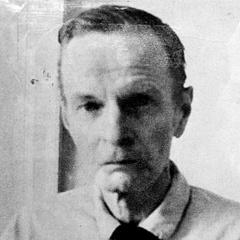
Cornell Woolrich
Cornell Woolrich

Cornell Woolrich was an American novelist known for his suspense novels. His works are characterized by their tense atmosphere and complex psychological descriptions, which have had a profound impact on detective novels and thrillers in films. more

You May Also Like

“With the first jolt he was in daylight; they had left the gateways of King’s Cross, and were under blue sky. Tunnels followed, and after each the sky grew bluer, and from the embankment at Finsbury Park he had his first sight of the sun. It rolled along behind the eastern smokes — a wheel, whose fellow was the descending moon — and as yet it seemed the servant of the blue sky, not its lord. He dozed again. Over Tewin Water it was day. To the left fell the shadow of the embankment and its arches; to the right Leonard saw up into the Tewin Woods and towards the church, with its wild legend of immortality. Six forest trees — that is a fact — grow out of one of the graves in Tewin churchyard. The grave’s occupant — that is the legend — is an atheist, who declared that if God existed, six forest trees would grow out of her grave. These things in Hertfordshire; and farther afield lay the house of a hermit — Mrs. Wilcox had known him — who barred himself up, and wrote prophecies, and gave all he had to the poor. While, powdered in between, were the villas of business men, who saw life more steadily, though with the steadiness of the half-closed eye. Over all the sun was streaming, to all the birds were singing, to all the primroses were yellow, and the speedwell blue, and the country, however they interpreted her, was uttering her cry of “now. ” She did not free Leonard yet, and the knife plunged deeper into his heart as the train drew up at Hilton. But remorse had become beautiful.”

“I'm sorry'--like 'I love you'--like many phrases--means more than one thing, even on its surface. So people get confused what they're saying and what they're hearing when the words 'I'm sorry' are spoken... But even when you're clear which kind of 'sorry' is in play, the words of an apology only mean what they are invested with. 'I'm sorry' is the vessel. What's inside the 'sorry' container makes all the difference.”

“There were times in my life, whole years, when anger got the better of me. Ugliness turned me inside out. There was a certain satisfaction in bitterness. I courted it. It was standing outside, and I invited it in. I scowled at the world. And the world scowled back ... And to be honest: I wasn’t really angry. Not anymore. I had left my anger somewhere long ago. Put it down on a park bench and walked away. And yet. It had been so long, I didn’t know any other way of being. One day I woke up and said to myself: It’s not too late. The first days were strange. I had to practice smiling in front of the mirror. But it came back to me. It was as if a weight had been lifted. I let go, and something let go of me.”