Quotessence
Home / Quotes / Quote by George Gissing

Quote by George Gissing

“What a vile, cursed world this is, where you may see men and women perish before your eyes, and no more chance of saving them than if they were going down in mid-ocean!”

Quote by George Gissing

Work

The Nether World

Browse quotes and source details for this work. more
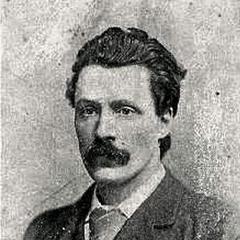
Author

George Gissing
George Gissing

George Gissing was an English novelist known for his profound depiction of the lives of the working class. His works often focus on the struggles of the lower class and critical reflections on Victorian British society. more

You May Also Like

“I would like, then, to end by putting in a good word for the non-industrious poor. At least they aren’t hurting anyone. Insofar as the time they are taking time off from work is being spent with friends and family, enjoying and caring for those they love, they’re probably improving the world more than we acknowledge. Maybe we should think of them as pioneers of a new economic order that would not share our current one's penchant for self-annihilation.”

“Communism — ladies and gentlemen, I say it without flinching: communism in eastern Europe, Russia, China, Mongolia, North Korea, and Cuba brought land reform and human services; a dramatic bettering of the living conditions of hundreds of millions of people on a scale never before or never since witnessed in human history, and that's something to appreciate. Communism transformed desperately poor countries into societies in which everyone had adequate food, shelter, medical care, and education, and some of us who come from poor families who carry around the hidden injuries of class are very impressed; are very, very impressed by these achievements and are not willing to dismiss them as economistic. To say that socialism doesn't work is to overlook the fact that it did work and it worked for hundreds of millions of people. 'But what about the democratic rights that they lost?' We hear U.S. leaders talking about 'restoring' democracy to the communist countries, but these countries—with the exception of Czechoslovakia—were not democracies before communism. Russia was a Czarist autocracy; Poland was a right-wing fascist dictatorship under Piłsudski, with concentration camps of its own; Albania was an Italian fascist protectorate as early as 1927; Cuba was a U.S.-sponsored dictatorship under that butcher Batista; Lithuania, Hungary, Romania, and Bulgaria were outright fascist regimes openly allied with Nazi Germany in World War 2. So, what—exactly what democracy are we talking about restoring? The socialist countries did not take away any rights that didn't exist there in the first place.”

“...Mellungeons… their entire lives appeared devoted to the production of the ragged line of scions which shoeless and tattered sat for hours at a time on the porch edges, themselves not unlike the victims of some terrible disaster, and stared out across the blighted land with expressions of neither hope nor wonder nor despair. They came and went, unencumbered as migratory birds, each succeeding family a replica of the one before and only the names on the mailboxes altered, the new ones lettered crudely in above a rack of paint smears that obliterated the former occupants back into the anonymity from which they sprang.”

“Looting is a natural response to the unnatural and inhuman society of commodity abundance. It instantly undermines the commodity as such, and it also exposes what the commodity ultimately implies: the army, the police and the other specialized detachments of the state’s monopoly of armed violence. What is a policeman? He is the active servant of the commodity, the man in complete submission to the commodity, whose job it is to ensure that a given product of human labor remains a commodity, with the magical property of having to be paid for, instead of becoming a mere refrigerator or rifle — a passive, inanimate object, subject to anyone who comes along to make use of it. In rejecting the humiliation of being subject to police, black people are at the same time rejecting the humiliation of being subject to commodities.”

“Poverty in youth, when it succeeds, has this magnificent property about it, that it turns the whole will toward effort, and the whole soul toward aspiration. Poverty instantly lays material life bare and renders it hideous; hence inexpressible bounds toward the ideal life. The wealthy young man has a hundred coarse and brilliant distractions, horse races, hunting, tobacco, gaming, good repasts, and all the rest of it; occupations for the baser side of the soul, at the expense of the loftier and more delicate sides. The poor young man wins his bread with difficulty; he eats; when he has eaten, he has nothing more but meditation. He goes to the spectacles which God furnishes gratis; he gazes at the sky, space, the stars, flowers, children, the humanity among which he is suffering, the creation admits which he beams. He gazes so much on humanity that he perceives its soul, he gazes upon creation to such an extent that he beholds God. He dreams, he feels himself great; he dreams on and feels himself tender.”

“To economists, everything revolves around scarcity - after all, even the biggest spenders can't buy everything. However, the perception of scarcity is not ubiquitous. An empty schedule feels different than a jam-packed workday. And that's not some harmless little feeling. Scarcity impinges on your mind. People behave differently when they perceive a thing to be scarce. What that thing is doesn't much matter; whether it's too little time, money, friendship, food - it all contributes to experience a "scarcity mentality". And this has benefits. People who experience a sense of scarcity are good at managing their short-term problems. Poor people have an incredible ability - in the short term - to make ends meet, the same way that overworked CEOs can power through to close a deal. Despite all this, the drawbacks of a "scarcity mentality" are greater than the benefits. Scarcity narrows your focus to your immediate lack, to the meeting that's starting in five minutes or the bills that need to be paid tomorrow. The long-term perspective goes out of the window. "Scarcity consumes you", Shafir explains. "You're less able to focus on other things that are also important to you." ... There's a key distinction though between people with busy lives and those living in poverty: You can't take a break from poverty.”