Quotessence
Home / Authors / Michael Parenti
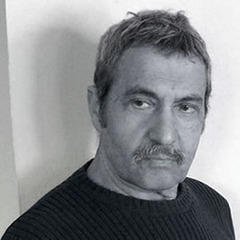
Michael Parenti

Michael Parenti Quotes

Political scientist

Filter quotes by topic

Famous Michael Parenti Quotes

“In 1989, I asked the GDR ambassador in Washington, D.C. why his country made such junky two-cylinder cars. He said the goal was to develop good public transportation and discourage the use of costly private vehicles. But when asked to choose between a rational, efficient, economically sound and ecologically sane mass transportation system or an automobile with its instant mobility, special status, privacy, and personal empowerment, the East Germans went for the latter, as do most people in the world. The ambassador added ruefully: "We thought building a good society would make good people. That's not always true." Whether or not it was a good society, at least he was belatedly recognizing the discrepancy between public ideology and private desire.”

“Communism — ladies and gentlemen, I say it without flinching: communism in eastern Europe, Russia, China, Mongolia, North Korea, and Cuba brought land reform and human services; a dramatic bettering of the living conditions of hundreds of millions of people on a scale never before or never since witnessed in human history, and that's something to appreciate. Communism transformed desperately poor countries into societies in which everyone had adequate food, shelter, medical care, and education, and some of us who come from poor families who carry around the hidden injuries of class are very impressed; are very, very impressed by these achievements and are not willing to dismiss them as economistic. To say that socialism doesn't work is to overlook the fact that it did work and it worked for hundreds of millions of people. 'But what about the democratic rights that they lost?' We hear U.S. leaders talking about 'restoring' democracy to the communist countries, but these countries—with the exception of Czechoslovakia—were not democracies before communism. Russia was a Czarist autocracy; Poland was a right-wing fascist dictatorship under Piłsudski, with concentration camps of its own; Albania was an Italian fascist protectorate as early as 1927; Cuba was a U.S.-sponsored dictatorship under that butcher Batista; Lithuania, Hungary, Romania, and Bulgaria were outright fascist regimes openly allied with Nazi Germany in World War 2. So, what—exactly what democracy are we talking about restoring? The socialist countries did not take away any rights that didn't exist there in the first place.”

“In order that a select few might live in great opulence, millions of people work hard for an entire lifetime, never free from financial insecurity, and at great cost to the quality of their lives. The complaint is not that the very rich have so much more than everyone else but that their superabundance and endless accumulation comes at the expense of everyone and everything else, including our communities and our environment.”

“Is the pain of revolution worth the gain? Cost-benefit accounting is a complicated business when applied to social transitions. But have we ever bothered to compare the violence of revolution against the violence that preceded it? "I do not know how one measures the price of historical victories;' said Robert Heilbroner, "I only know that the way in which we ordinarily keep the books of history is wrong." We make no tally of the generations claimed by that combination of economic exploitation and political suppression so characteristic of the ancient regimes: the hapless victims of flood and famine in the Yangtze valley of yesterday, the child prostitutes found dead in the back alleys of old Shanghai, the muzhiks stricken by cold and starvation across the frozen steppes of Russia.”

“The "left" ABC (Anything But Class) theorists say we are giving too much attention to class. Who exactly is doing that? Surveying the mainstream academic publications, radical journals, and socialist scholars conferences, one is hard put to find much class analysis of any kind. Far from giving too much attention to class power, most U.S. writers and commentators have yet to discover the subject. While pummeling a rather minuscule Marxist Left, the ABC theorists would have us think they are doing courageous battle against hordes of Marxists who dominate intellectual discourse in this country-yet another hallucination they hold in common with conservatives”

“All conservative ideologies justify existing inequities as the natural order of things, inevitable outcomes of human nature. If the very rich are naturally so much more capable than the rest of us, why must they be provided with so many artificial privileges under the law, so many bailouts, subsidies and other special considerations - at our expense? Their "naturally superior talents" include unprincipled and illegal subterfuge such as price-fixing, stock manipulation, insider training, fraud, tax evasion, the legal enforcement of unfair competition, ecological spoliation, harmful products and unsafe work conditions. One might expect naturally superior people not to act in such rapacious and venal ways. Differences in talent and capacity as might exist between individuals do not excuse the crimes and injustices that are endemic to the corporate business system.”

“During the cold war, the anticommunist ideological framework could transform any data about existing communist societies into hostile evidence. If the Soviets refused to negotiate a point, they were intransigent and belligerent; if they appeared willing to make concessions, this was but a skillful ploy to put us off our guard. By opposing arms limitations, they would have demonstrated their aggressive intent; but when in fact they supported most armament treaties, it was because they were mendacious and manipulative. If the churches in the USSR were empty, this demonstrated that religion was suppressed; but if the churches were full, this meant the people were rejecting the regime's atheistic ideology. If the workers went on strike (as happened on infrequent occasions), this was evidence of their alienation from the collectivist system; if they didn't go on strike, this was because they were intimidated and lacked freedom. A scarcity of consumer goods demonstrated the failure of the economic system; an improvement in consumer supplies meant only that the leaders were attempting to placate a restive population and so maintain a firmer hold over them. If communists in the United States played an important role struggling for the rights of workers, the poor, African-Americans, women, and others, this was only their guileful way of gathering support among disfranchised groups and gaining power for themselves. How one gained power by fighting for the rights of powerless groups was never explained. What we are dealing with is a nonfalsifiable orthodoxy, so assiduously marketed by the ruling interests that it affected people across the entire political spectrum.”

“Again and again we are asked to choose between freedom and security when in truth there is no security without freedom. In both dictatorships and democracies, the agencies of "national security", acting secretively and unaccountably, have regularly violated both our freedom and our security, practicing every known form of repression, corruption, and deceit.”

“[...] what is more reductionist than to ignore the underlying dynamics of economic power and the conflict between capital and labor? What is more misleading than to treat occupational groups as autonomous classes, giving attention to every social group in capitalist society except the capitalist class itself, to every social conflict except class conflict?”

“The prevailing opinion among historians, ancient and modern alike, is that the senatorial assassins were intent upon restoring republican liberties by doing away with a despotic usurper. This is the justification offered by the assassins themselves. I present an alternative explanation: The Senate aristocrats killed Caesar because they perceived him to be a popular leader who threatened their privileged interests.”

“For those local and international elites who maintain control over most of the world's wealth, social revolution is an abomination. Whether it be peaceful or violent is a question of no great moment to them. Peaceful reforms that infringe upon their profitable accumulations and threaten their class privileges are as unacceptable to them as the social upheaval by revolution.”

“What distinguishes fascism from ordinary right-wing patriarchal autocracies is the way it attempts to cultivate a revolutionary aura. Fascism offers a beguiling mix of revolutionary-sounding mass appeals and reactionary class politics. The Nazi party's full name was the National Socialist German Workers Party, a left-sounding name. As already noted, the SA storm troopers had a militant share-the-wealth strain in their ranks that was suppressed by Hitler after he took state power.”

“There’s only one thing that the ruling circles throughout history have ever wanted-all the wealth, the treasures, and the profitable returns; all the choice lands and forests and game and herds and harvests and mineral deposits and precious metals of the earth; all the productive facilities and gainful inventiveness and technologies; all the control positions of the state and other major institutions; all public supports and subsidies, privileges and immunities; all the protections of the law and none of its constraints; all of the services and comforts and luxuries and advantages of civil society with none of the taxes and none of the costs. Every ruling class in history has wanted only this-all the rewards and none of the burdens.”

“Anticommunist propaganda saturated our airwaves, schools, and political discourse. Despite repeated and often factitious references to the tyranny of the Red Menace, the anticommunist opinion makers never spelled out what communists actually did in the way of socioeconomic policy. This might explain why, despite decades of Red-bashing propaganda, most Americans, including many who number themselves among the political cognoscenti, still cannot offer an informed statement about the social policies of communist societies.”

“If there were mass atrocities right down to the last days of communism, why did not the newly installed anticommunist regimes seize the opportunity to bring erstwhile communist rulers to justice? Why no Nuremberg-style public trials documenting widespread atrocities? Why were not hundreds of party leaders and security officials and thousands of camp guards rounded up and tried for the millions they supposedly exterminated? The best the West Germans could do was charge East German leader Erich Honecker, several other officials, and seven border guards with shooting people who tried to escape over the Berlin Wall, a serious charge but hardly indicative of a gulag.”

“Unlike most bourgeois theorists, Marx realized that what capitalism claims to be and what it actually is are two different things. What is unique about capitalism is the systematic expropriation of labor for the sole purpose of accumulation. Capital annexes living labor in order to accumulate more capital. The ultimate purpose of work is not to perform services for consumers or sustain life and society, but to make more and more money for the investor irrespective of the human and environmental costs.”

“With each newly minted crisis, US leaders roll out the same time-tested scenario. They start demonizing a foreign leader ... charging them with being communistic or otherwise dictatorial, dangerously aggressive, power hungry, genocidal, given to terrorism or drug trafficking, ready to deny us access to vital resources, harboring weapons of mass destruction, or just inexplicably "anti-American" and "anti-West." Lacking any information to the contrary, the frightened public ... are swept along.”

“The nation, like the church, has its visible symbols and insignia, its parchments engrossed with the revealed word, its dogmas, hymns, liturgy, holy day celebrations, its early Fathers, prophets and martyrs, its priesthood and its lay sodality, its myths of sacred genesis and apocalyptic crises, its world-saving mission and its missionaries.”

“In the end I created a career of my own, concentrating on my writing and lecturing, reaching larger audiences than I would had I ended up with tenure and a full teaching load. It was Virginia Woolf who said that it is terrible to be frozen out of a sacred tradition - but even more terrible to be frozen into it.”

“All economic and political institutions are contrivances that should serve the interests of the people. When they fail to do so, they should be replaced by something more responsive, more just, and more democratic. Marx said this, and so did Jefferson. It is a revolutionary doctrine, and very much an American one.”

“Conventional opinions fit so comfortably into the dominant paradigm as to be seen not as opinions but as statements of fact, as 'the nature of things.' The very efficacy of opinion manipulation rests on the fact that we do not know we are being manipulated. The most insidious forms of oppression are those that so insinuate themselves into our communication universe and the recesses of our minds that we do not even realize they are acting upon us.”

“Global warming is already acting upon us with an accelerated feedback and compounded effect that may be irreversible! We do not have eons or centuries or many decades. Most of us alive today may not even have the luxury of saying 'Après moi, le déluge' because we will be around to experience it ourselves. And if you think it will be 'interesting' or 'exciting,' ask the tsunami survivors if that's how they felt. This time the plutocratic drive to 'accumulate, accumulate, accumulate' may take all of us down, once and forever.”

“Ecology's implications for capitalism are too momentous for the capitalist to contemplate. The plutocrats are more wedded to their wealth than to the Earth upon which they live, more concerned with the fate of their fortunes than with the fate of humanity. The present ecological crisis has been created by the few at the expense of the many.”