Quotessence
Home / Quotes / Quote by Vladimir Nabokov

Quote by Vladimir Nabokov

“One peculiar feature of Tolstoy's style is what I shall term the "groping purist." In describing a meditation, emotion, or tangible object, Tolstoy follows the contours of the thought, the emotion, or the object until he is perfectly satisfied with his re-creation, his rendering. This involves what we might call creative repetitions, a compact series of repetitive statements, coming one immediately after the other, each more expressive, each closer to Tolstoy's meaning. He gropes, he unwraps the verbal parcel for its inner sense, he peels the apple of the phrase, he tries to say it one way, then a better way, he gropes, he stalls, he toys, he Tolstoys with words.”

Quote by Vladimir Nabokov

Work

Lectures on Russian Literature

This book offers in-depth analysis and discussion of significant Russian literary texts and authors, providing a scholarly perspective on the evolution of Russian literature. more

Author
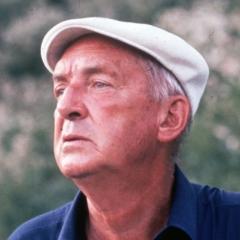
Vladimir Nabokov
Vladimir Nabokov

Russian-born American novelist, best known for his novel 'Lolita'. Nabokov is renowned for his unique literary style and profound use of language and symbolism. more

You May Also Like

“No, he thought, I’m not cool and collected, and I’m not always doing things at my own pace. It’s just a question of balance. I’m just good at habitually shifting the weight I carry around from one side of the fulcrum to the other, distributing it. Maybe this strikes others as cool. But it isn’t an easy operation. It takes more time than it seems. And even if I do find the right balance, that doesn’t lessen the total weight one bit.”

“Yet we must know, if only in order to learn not to known. The supreme lesson of human consciousness is to learn how not to know. That is, how not to interfere. That is, how to live dynamically, from the great Source, and not statically, like machines driven by ideas and principles from the head, or automatically from one fixed desire. At last, knowledge must be put into its true place in the living activity of man. And we must know deeply, in order to do that.”

“Still another barrier for many people which closes the door to success is the mania or passion for reading too many books, because of their inability to make a definite choice. Getting one on a theme which interests them, they invariably soon seek something “new,” and as soon as that has been read, they again start their interminable searching. Their lives pass without being properly and reasonably used. Such men forget that books are much more numerous than the weeks and months they have yet to live through. So what is the good of having read even half of them and dying before making any use of the things which men know only mentally? After all, books are usually for us only crystallized stores of borrowed thoughts created by other men, and not always of use to us, since in all fields of literature they so frequently offer only fiction or near-fiction, which can hardly help an earnest seeker. Although the mind is only a secondary power in man, compared with the higher wisdom consciousness known in Samadhi, which is devoid of thoughts, faults in the structure of that mind are almost an absolute barrier impossible to over come in any study, and especially in the present one. Inadequate comprehension is the same as insufficient knowledge of a foreign alphabet for someone who wants to read in that particular language. It may happen that it is not merely an unquenchable thirst for reading which drives a man from one author to another, but the fact that he is not satisfied with any so far encountered. In such a case there is nothing more to say then: “Seek and ye shall find.”