Quotessence
Home / Quotes / Quote by Dante Alighieri

Quote by Dante Alighieri

Work

The Divine Comedy: Inferno - Purgatorio - Paradiso

Browse quotes and source details for this work. more

Author
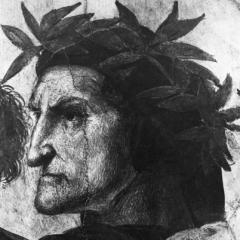
Dante Alighieri
Dante Alighieri

Dante Alighieri, an Italian poet and a pioneer of the Renaissance, is hailed as the father of Italian literature. Born in 1265 and died on September 14, 1321, Dante is best known for his epic poem, 'The Divine Comedy,' which is not only a great literary work but also a profound religious and philosophical treatise. more

You May Also Like

“The black water nipping at her thrashing heels was freezing. Not the bite of winter chill, or even the burn of solid ice, but something colder. Deeper. The cold of the gaps between stars, teh cold of a world before light. The cold of hell- true hell, she realised as she bucked against the strong hands trying to shove her into the Cauldron. True hell, because that was Elain lying on the stone floor with the red-haired, one-eyed Fae male hovering over her. Because those were pointed ears poking through her sister's sodden gold-brown hair, and an immortal glow radiating from Elain's fair skin. True hell- worse than the inky depths mere inches from her toes.”

“Eucharistic participation in Christ is the foundation of a freely willed movement towards God, and is the present realization of the personal choice (“in accordance with nature”) of that dialogical reciprocity that saves and perfects nature, whereas its denial is the kindling of a (“contrary to nature”) self-loving necrosis within the abundance of life itself. In each case freedom according to the image of God remains: we have, then, either freedom as a dialogical love that liberates nature in a eucharistic relationship, or freedom without love – or rather, without dialogue – which imprisons nature in a malicious self-will and self-activity. The question about the eternity of hell thus does not affect God and his love, because hell will end when the devil wants to end it, when he ceases from his malice against God – because if hell is the absolute narcissistic enclosure within oneself, in an imaginary superiority that denies the reality of corruption and the need for the transformation of the created, then this situation becomes in the end the soul’s ultimate blindness, its self-condemnation to hell. Hell, then, is the denial of the Eucharist, the tragic freedom of absolute narcissism, that is, the supreme self-torture of a freely chosen enmity against love. As the boundary of heaven, it is lit dimly by its light, and this minimal gleam of rationality that is shed on it besieges the abyss of its irrationality with the compassion of the saints of God; but the battle against this hardened self-deification is indescribably frightening and also inauspicious. The rest is known to God alone....”