Quotessence
Home / Quotes / Quote by Robert Hayden

Quote by Robert Hayden

Work

Collected Poems

This book is a collection of poems that spans different styles and themes, showcasing the diversity of poetic expression. more
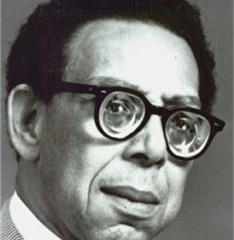
Author

Robert Hayden
Robert Hayden

Robert Hayden was an American poet known for his profound exploration of race and identity. His poetry often reflected the history and culture of the African American community, having a significant impact on contemporary poetry. more

You May Also Like

“You're unsure what you think of him, a fact you pride yourself on. It defines you, this willingness to hear all sides, love everyone. You've stopped believing in evil. Is that a sin? You know what your mother would say, but justice needs to be fair-handed, the dead deserve your compassion. It's your job to understand, to forgive, not simply your custom.”

“And there is further testimony, so extensive and so powerful that it seems unpardonable to ignore it. Our corruptibility is not contingent. We pretend to know this but rarely examine the relevance of this knowledge to our hopes. We pretend to know that nothing is evergreen, that each source of life is eventually exhausted and each concentration of energy eventually dispersed. We pretend to know that the biological process of life itself is the source of anxiety, conflict, aggression, uncertainty, concern. We pretend to know that no consistent system of values is possible and that at every step values that we consider important become mutually exclusive when we attempt their practical application to individual cases; tragedy, the moral victory of evil, is always possible. We pretend to know that reason often hampers our ability to liberate our energies, that moments of joy are more often than not wrested from intellectual lucidity. We pretend to know that creation is a struggle of man against himself and, more often than not, against others also, that the bliss of love lies in hopeful dissatisfaction, that in our world, death is the only total unity. We pretend to know why our noble motives slide into evil results, why our will toward good emerges from pride, hatred ,vanity, envy, personal ambition. We pretend to know that most of life consists in taking flight from reality and concealing this reality from ourselves. We pretend to know that our efforts to improve the world are constrained by the narrow limits defined by our biological structure and by the pressures of the past which have molded us and which we cannot leave very far behind. All these things, which we pretend to be aware of, compose the reality of original sin---and yet it is this reality that we attempt to deny.”