Quotessence
Home / Quotes / Quote by E. Fuller Torrey

Quote by E. Fuller Torrey

Work

Author

E. Fuller Torrey
E. Fuller Torrey

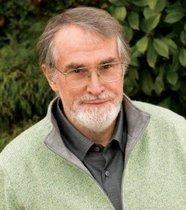
E. Fuller Torrey is an American psychiatrist renowned for his research on schizophrenia and his influence on mental health policy. He has conducted extensive research in the field of psychiatry, particularly on the relationship between schizophrenia and violent behavior. more

You May Also Like

“...At the same time, something odd was happening to my ability to converse. I had always enjoyed engaging in arguments, regardless of topic. I regarded them as a sort of game (not that this is in any way unique). Suddenly, however, I couldn't talk—more accurately, I couldn't stand listening to myself talk . I started to hear a “voice” inside my head, commenting on my opinions. Every time I said something, it said something— something critical. The voice employed a standard refrain, delivered in a somewhat bored and matter-of-fact tone: You don't believe that. That isn't true. You don't believe that. That isn't true. The “voice” applied such comments to almost every phrase I spoke. I couldn't understand what to make of this. I knew the source of the commentary was part of me, but this knowledge only increased my confusion. Which part, precisely, was me— the talking part or the criticizing part ? If it was the talking part, then what was the criticizing part? If it was the criticizing part—well, then: how could virtually everything I said be untrue? In my ignorance and confusion, I decided to experiment. I tried only to say things that my internal reviewer would pass unchallenged. This meant that I really had to listen to what I was saying, that I spoke much less often, and that I would frequently stop, midway through a sentence, feel embarrassed, and reformulate my thoughts. I soon noticed that I felt much less agitated and more confident when I only said things that the “voice” did not object to. This came as a definite relief. My experiment had been a success; I was the criticizing part. Nonetheless, it took me a long time to reconcile myself to the idea that almost all my thoughts weren't real, weren't true—or, at least, weren't mine. All the things I “believed” were things I thought sounded good, admirable, respectable, courageous. They weren't my things, however—I had stolen them. Most of them I had taken from books. Having “understood” them, abstractly, I presumed I had a right to them—presumed that I could adopt them, as if they were mine: presumed that they were me . My head was stuffed full of the ideas of others; stuffed full of arguments I could not logically refute. I did not know then that an irrefutable argument is not necessarily true, nor that the right to identify with certain ideas had to be earned.”

“...when he witnessed his first struggle (against another prisoner) - during which the cell chief urged everyone to "help" the man under fire - he thought to himself: "So this is the way of the Communists - using good words to do bad things”

“Why did we create a society that not only forces most people to work to live but also makes even the most privileged feel like they have to work desperately hard all the time? We created a mythology that regards the need to reach the top of the mountain because it’s there as a measure of human worth, but when we get there, there’s always another mountain, and another one after that. Most of us live our whole lives either struggling to stay on solid ground or climbing mountain after mountain.”