Quotessence
Home / Quotes / Quote by Augusten Burroughs

Quote by Augusten Burroughs

Work

Magical Thinking: True Stories

This book delves into the extraordinary ways in which individuals have harnessed the power of their imagination to overcome adversity, achieve personal growth, and create meaningful change in their lives. more

Author
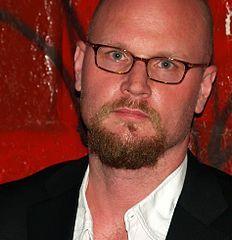
Augusten Burroughs
Augusten Burroughs

Augusten Burroughs is an American writer born on October 23, 1965. Known for his memoirs, his works, such as 'Dry' and 'Running with Scissors,' have gained widespread popularity and critical acclaim. more

You May Also Like

“He had panicked. Tessier cursed his own stupidity. He should have remained in the column where he would have been protected. Instead, he saw an enemy coming for him like a revenant rising from a dark tomb, and had run first instead of thinking. Except this was no longer a French stronghold. The forts had all been captured and surrendered and the glorious revolutionary soldiers had been defeated. If the supply ships had made it through the blockade, Vaubois might still have been able to defend the city, but with no food, limited ammunition and disease rampant, defeat was inevitable. Tessier remembered the gut-wrenching escape from Fort Dominance where villagers spat at him and threw rocks. One man had brought out a pistol and the ball had slapped the air as it passed his face. Another man had chased him with an ancient boar spear and Tessier, exhausted from the fight, had jumped into the water. He had nearly drowned in that cold grey sea, only just managing to cling to a rock whilst the enemy searched the shoreline. The British warship was anchored outside the village, and although Tessier could see men on-board, no one had spotted him. Hours passed by. Then, when he considered it was clear, he swam ashore to hide in the malodorous marshland outside Mġarr. His body shivered violently and his skin was blue and wrinkled like withered fruit, but in the night-dark light he lived. He had crept to a fishing boat, donned a salt-stained boat cloak and rowed out to Malta's monochrome coastline. He had somehow managed to escape capture by abandoning the boat to swim into the harbour. From there it had been easy to climb the city walls and to safety. He had written his account of the marines ambush, the fort’s surrender and his opinion of Chasse, to Vaubois. Tessier wanted Gamble cashiered and Vaubois promised to take his complaint to the senior British officer when he was in a position to. Weeks went past. Months. A burning hunger for revenge changed to a desire for provisions. And until today, Tessier reflected that he would never see Gamble again. Sunlight twinkled on the water, dazzling like a million diamonds scattered across its surface. Tessier loaded his pistol in the shadows where the air was still and cool. He had two of them, a knife and a sword, and, although starving and crippled with stomach cramps, he would fight as he had always done so: with everything he had.”

“In Malta, the Wars of Religion reached their climax. If both sides believed that they saw Paradise in the bright sky above them, they had a close and very intimate knowledge of Hell.”

“The manner in which we have been treated by the English has exceeded all our expectations. It is regrettable that two such generous and advanced nations have to be enemies with one another. Why is it not possible for us to unite? I must say, that under the current circumstances my feelings towards this illustrious nation are very different to those I had during the blockade. I am enchanted by their open-mindedness, the sincerity, the culture of the people we are dealing with. They have given me a strong desire that someday soon we can become friends of these interesting people who deserve a better form of government.”

“Between the palaces of the knights and those that served them; the convents, the elegant homes belonging to officers of the Church and the town; between the bakehouse and the shops of the craftsmen, the arsenals and magazines, the warehouses, the homes of merchants and courtesans, Italian, Spanish, Greek; past the painted shrines and courtyards scraped from pockets of earth with their bright waxy green carob trees, a fig, a finger of vine, a blue and orange pot of dry, dying flowers and a tethered goat bleating in a swept yard, padded the heirs of this rock, this precious knot in the trade of the world. Umber-skinned, grey-eyed, barefoot and robed as Arabs with the soft, slurring dialect that Dido and Hannibal spoke, they slipped past the painted facades to their Birgu of fishermen's huts and blank, Arab-walled houses or to sleep, curled in the shade, with the curs in a porch.”