Quotessence
Home / Quotes / Quote by Susan Hill

Quote by Susan Hill

“The lamps were lit, and a good fire crackled in the great stone fireplace. There was a discreet chink of china, the brightness of silver teapot and muffin cover, the comforting smell mingled of steaming hot water, toast and a little sweet tobacco.”

Quote by Susan Hill

Work

The Mist in the Mirror

Browse quotes and source details for this work. more

Author
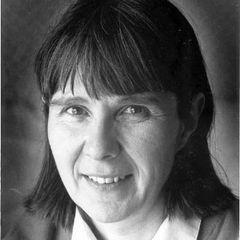
Susan Hill
Susan Hill

Susan Hill is a renowned British author, born on February 5, 1942. She is best known for her suspense and thriller novels, with works like 'The Woman in Black' and 'The House on the Edge of the Water' gaining widespread acclaim. more

You May Also Like

“The moon: in that luminous face one can behold those tired phases that bring only disappointment and no satisfaction; the impulses governing its expression remain patternistic, its cycles of transition easily predictable. With moderated temperament it commands the capricious sea: its diametric opponent, in whose helpless defiance, arises an empty, albeit elegant promise, an ever-changing flicker of reflected light, a simultaneous opening and closing of paths to be traversed, a vacillating hope and disillusionment in whose unsettling direction emerges something one might wish to call, even under the hardened visage of sky, a marginal sense of freedom. To walk upon the decks of ramshackle vessels rising and descending in patterns indeterminate, to lean in ecstasy over their shaky rails to witness the splendor of that which transforms immediately upon being witnessed and which transforms thereby the witness in question: it was these flights of reverie that appealed better to one’s imagination than the lean pragmatism of predictable transition.”

“The foundation's decision to get involved in human rights but 'not get involved in politics' created a context in which it was all but impossible to ask the question underlying the violence it was documenting: Why was it happening, in whose interests? That omission has played a disfiguring role in the way the history of the free-market revolution has been told, largely absent any taint of the extraordinarily violent circumstances of its birth. Just as the Chicago economists had nothing to say about the torture (it had nothing to do with their areas of expertise), the human rights groups had little to say about the radical transformations taking place in the economic sphere (it was beyond their narrow legal purview).”