Quotessence
Home / Quotes / Quote by James M. Cain

Quote by James M. Cain

“Then one day, stead of her going in alone, we both went in, and after she came out of the hospital, we cut for the beach. They gave her a yellow suit and a red cap, and when she came out I didn’t know her at first. She looked like a little girl. It was the first time I ever really saw how young she was. We played in the sand, and then we went way out and let the swells rock us. I like my head to the waves, she liked her feet. We lay there, face to face, and held hands under water. I looked up at the sky. It was all you could see. I thought about God.”

Quote by James M. Cain

Work

The Postman Always Rings Twice

This novel explores themes of obsession, greed, and the destructive power of love through the story of a woman and her lover who commit a murder in a small town. The narrative is known for its suspenseful and atmospheric storytelling, and its exploration of the dark side of human nature. more

Author
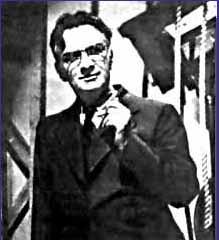
James M. Cain
James M. Cain

James M. Cain was an American author known for his crime novels and noir fiction. His works, often featuring hard-boiled detectives, had a profound impact on 20th-century American literature. more

You May Also Like

“That’s right," It was Jace. Clary saw him, at the blurred edge of her vision, as he moved toward her and put a hand on her shoulder, turning her to face him. "It's just a kiss," he said, and though his tone was harsh, his hands were inexplicably gentle. She let him turn her, looked up at him. His eyes were very dark, perhaps because it was so dim down here in the Court, perhaps because of something else. She could see her reflection in each of his dialted pupils, a tiny image of herself inside his eyes. He said, “You can close your eyes and think of England, if you like." "I've never even been to England," she said, but she shut her eyelids. She could feel the dark heaviness of her clothes, cold and itchy against her skin, and the cloying sweet air of the cave, colder yet, and the weight of Jace's hands on her shoulders, the only things that were warm. And then he kissed her. She felt the brush of his lips, light at first, and her own opened automatically beneath the pressure. Almost against her will she felt herself go fluid and pliant, stretching upward to twine her arms around his neck the way that a sunflower twists toward light. His arms slid around her, his hands knotting in her hair, and the kiss stopped being gentle and became fierce, all in a single moment like tinder flaring into a blaze. Clary heard a sound like a sigh rush through the Court, all around them, a wave of noise, but it meant nothing, was lost in the rush of her blood through her veins, the dizzying sense of weightlessness in her body. Jace's hands moved from her hair, slid down her spine; she felt the hard press of his palms against her shoulder blades--and then he pulled away, gently disengaging himself, drawing her hands away from his neck and stepping back. For a moment Clary thought she might fall; she felt as if something essential had been torn away from her, an arm or a leg, and she stared at Jace in blank astonishment--what did he feel, did he feel nothing? She didn't think she could bear it if he felt nothing. He looked back at her, and when she saw the look on his face, she saw his eyes at Renwick's, when he had watched the Portal that separated him from his home shatter into a thousand irretrievable pieces. He held her gaze for a split second, then looked away from her, the muscles in his throat working. His hands were clenched into fists at his sides. "Was that good enough?" he called, turning to face the Queen and the courtiers behind her. "Did that entertain you?" The Queen had a hand across her mouth, half-covering a smile. "We are quite entertained," she said. "But not, I think, so much as the both of you." "I can only assume," said Jace, "that mortal emotions amuse you because you have none of your own." The smile slipped from her mouth at that.”

“From what vague signs, for instance, do the young gentlemen of this audience conclude that they have won the favor of a lady? Do you await an explicit declaration, an ardent embrace, or does not a glance, scarcely perceptible to others, a fleeting gesture, the prolonging of a hand-shake by one second, suffice? […] Therefore, let us not undervalue small signs; perhaps by means of them we will succeed in getting on the track of greater things.”

“A person's being in love often furnishes comic, and sometimes even tragic, phenomena, both because, taken possession of by the spirit of the species, he is now ruled by it, and no longer belongs to himself; in this way his conduct becomes inappropriate to the individual. In the higher degrees of being in love, his thoughts are given such a poetical and sublime touch, even a transcendent and hyperphysical tendency, by virtue of which he appears wholly to lose sight of his real, very physical aim.”

“Why, then, does the man in love hang with complete abandon on the eyes of his chosen one, and is ready to make every sacrifice for her? Because it is his immortal part that longs for her; it is always the mortal part alone that longs for everything else. That eager or even ardent longing, directed to a particular woman, is therefore an immediate pledge of the indestructibility of the kernel of our true nature, and of its continued existence in the species. But to regard this continued existence as something trifling and insufficient is a mistake, which arises from the fact that, by the continued life of the species, we understand nothing more than the future existence of beings similar to, but in no respect identical with, ourselves; and this again because, starting from knowledge directed outwards, we take into consideration only the external form of the species, as we apprehend this in perception, and not its inner nature.”