Quotessence
Home / Quotes / Quote by Fernando Pessoa

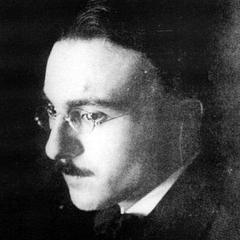
Quote by Fernando Pessoa

“It's always with exaggerated emotion that I leave something behind, whatever it may be. The miserable rented room where I lived for a few months, the dinner table at the provincial hotel where I stayed for six days, even the sad waiting room at the station where I spent two hours waiting for a train--yes, their loss grieves me.”

Quote by Fernando Pessoa

Work

The Book of Disquiet

Written by Fernando Pessoa, this work is a collection of fragments and thoughts that delve into the human condition, offering a unique perspective on the complexities of life and consciousness. more

Author

Fernando Pessoa
Fernando Pessoa

Portuguese poet known for his unique narrative style and rich inner world. Fernando Pessoa is considered one of the most influential writers of the 20th century, and his works are still widely studied and discussed today. more

You May Also Like

“Of course false-rape allegations have happened. My friend Astra Taylor points out that the most dramatic examples in this country were when white men falsely accused Black men of assaulting white women. Which means that if you want to be indignant on the subject, you’ll need to summon up a more complicated picture of how power, blame, and mendacity actually work. (“Feminism: The Men Arrive”)”

“Finally, another large-scale study [of false rape allegations] was conducted in Australia, with the 850 rapes reported to the Victoria police between 2000 and 2003 (Heenan & Murray, 2006). Using both quantitative and qualitative methods, the researchers examined 812 cases with sufficient information to make an appropriate determination, and found that only 2.1% of these were classified as false reports. All of these complainants were then charged or threatened with charges for filing a false police report." Lonsway, K. A., Archambault, J., & Lisak, D. (2009). False reports: Moving beyond the issue to successfully investigate and prosecute non-stranger sexual assault. The Voice, 3(1), 1-11.”

“The largest and most rigorous study that is currently available in this area is the third one commissioned by the British Home Office (Kelly, Lovett, & Regan, 2005). The analysis was based on the 2,643 sexual assault cases (where the outcome was known) that were reported to British police over a 15-year period of time. Of these, 8% were classified by the police department as false reports. Yet the researchers noted that some of these classifications were based simply on the personal judgments of the police investigators, based on the victim’s mental illness, inconsistent statements, drinking or drug use. These classifications were thus made in violation of the explicit policies of their own police agencies. There searchers therefore supplemented the information contained in the police files by collecting many different types of additional data, including: reports from forensic examiners, questionnaires completed by police investigators, interviews with victims and victim service providers, and content analyses of the statements made by victims and witnesses. They then proceeded to evaluate each case using the official criteria for establishing a false allegation, which was that there must be either “a clear and credible admission by the complainant” or “strong evidential grounds” (Kelly, Lovett, & Regan,2005). On the basis of this analysis, the percentage of false reports dropped to 2.5%." Lonsway, Kimberly A., Joanne Archambault, and David Lisak. "False reports: Moving beyond the issue to successfully investigate and prosecute non-stranger sexual assault." The Voice 3.1 (2009): 1-11.”

“The prediction of false rape-related beliefs (rape myth acceptance [RMA]) was examined using the Illinois Rape Myth Acceptance Scale (Payne, Lonsway, & Fitzgerald, 1999) among a nonclinical sample of 258 male and female college students. Predictor variables included measures of attitudes toward women, gender role identity (GRI), sexual trauma history, and posttraumatic stress disorder (PTSD) symptom severity. Using linear regression and testing interaction effects, negative attitudes toward women significantly predicted greater RMA for individuals without a sexual trauma history. However, neither attitudes toward women nor GRI were significant predictors of RMA for individuals with a sexual trauma history." Rape Myth Acceptance, Sexual Trauma History, and Posttraumatic Stress Disorder Shannon N. Baugher, PhD, Jon D. Elhai, PhD, James R. Monroe, PhD, Ruth Dakota, Matt J. Gray, PhD”