“During the second half of the sixties, the center of the crisis shifted to the sprawling ghettos of the North. Here black experience was radically different from that in the South. The stability of institutional relationships was largely absent in Northern ghettos, especially among the poor. Over twenty years ago, the black sociologist E. Franklin Frazier was able to see the brutalizing effect of urbanization upon lower class blacks : ". . . The bonds of sympathy and community of interests that held their parents together in the rural environment have been unable to withstand the disintegrating forces in the city." Southern blacks migrated North in search of work, seeking to become transformed from a peasantry into a working class. But instead of jobs they found only misery, and far from becoming a proletariat, they came to constitute a lumpenproletariat, an underclass of rejected people. Frazier's prophetic words resound today with terrifying precision: ". . . As long as the bankrupt system of Southern agriculture exists, Negro families will continue to seek a living in the towns and cities of the country. They will crowd the slum areas of Southern cities or make their way to Northern cities, where their family life will become disrupted and their poverty will force them to depend upon charity." Out of such conditions, social protest was to emerge in a form peculiar to the ghetto, a form which could never have taken root in the South except in such large cities as Atlanta or Houston. The evils in the North are not easy to understand and fight against, or at least not as easy as Jim Crow, and this has given the protest from the ghetto a special edge of frustration. There are few specific injustices, such as a segregated lunch counter, that offer both a clear object of protest and a good chance of victory. Indeed, the problem in the North is not one of social injustice so much as the results of institutional pathology. Each of the various institutions touching the lives of urban blacks—those relating to education, health, employment, housing, and crime—is in need of drastic reform. One might say that the Northern race problem has in good part become simply the problem of the American city—which is gradually becoming a reservation for the unwanted, most of whom are black.”
Quote by Bayard Rustin
Work
Down the Line: The Collected Writings of Bayard Rustin
Browse quotes and source details for this work. more
Author
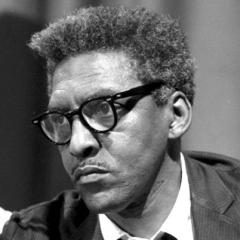
Bayard Rustin
Bayard Rustin was a prominent African American civil rights activist who played a significant role in the American civil rights movement. He was a strategist and advisor to many civil rights leaders, including Martin Luther King Jr. Rustin was a key figure in the organization of the 1963 March on Washington for Jobs and Freedom, one of the largest political protests in U.S. history. He was also a leader in the gay rights movement and advocated for nonviolent protest and civil disobedience. more
You May Also Like
Source: Through the Eyes of Rebel Women: The Young Lords, 1969-1976
Source: From Youngstown to Rome´s Fall: How I, Earl Jenkins, Remembered What the Empire Forgot
Source: Our Thoughts Determine Our Lives: The Life and Teachings of Elder Thaddeus of Vitovnica
Source: From Youngstown to Rome´s Fall: How I, Earl Jenkins, Remembered What the Empire Forgot