Quotessence
Home / Quotes / Quote by Jean Baudrillard

Quote by Jean Baudrillard

“The information superhighways will have the same effect as our present superhighways or motorways. They will cancel out the landscape, lay waste to the territory and abolish real distances. What is merely physical and geographical in the case of our motorways will assume its full dimensions in the electronic field with the abolition of mental distances and the absolute shrinkage of time. All short circuits (and the establishment of this planetary hyper-space is tantamount to one immense short circuit) produce electric shocks. What we see emerging here is no longer merely territorial desert, but social desert, employment desert, the body itself being laid waste by the very concentration of information. A kind of Big Crunch, contemporaneous with the Big Bang of the financial markets and the information networks. We are merely at the dawning of the process, but the waste and the wastelands are already growing much faster than the computerization process itself.”

Quote by Jean Baudrillard

Work

Screened Out

Browse quotes and source details for this work. more

Author
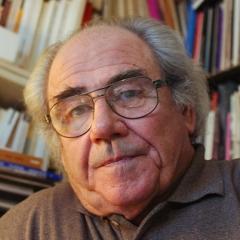
Jean Baudrillard
Jean Baudrillard

Jean Baudrillard was a French philosopher known for his critical studies on consumerism, media, and semiotics. His theories have had a profound impact on postmodernism and cultural studies. more

You May Also Like

“The simple truth is that the Web the Internet, does one thing. It speeds up the retrieval and dissemination of information, partially eliminating such chores as going outdoors to the mailbox or the adult bookstore, or having to pick up the phone to get hold of your stockbroker or some buddies to shoot the breeze with. That one thing the Internet does, and only that. All the rest is Digibabble.”

“Only people who have a world-historical perspective can change history. The average person has only a domestic, ahistorical perspective. Look at social media. It’s full of people without a clue what’s going on. Immense historical forces have been unleashed all around them, and all they care about is posting their brain-dead, vacuous observations and their self-pitying, whining woe-is-me statements about how shitty their lives are and how no one understands them. As well as countless memes and selfies, of course. You just have to love those lolcats on skateboards, right, hoomans? They are forever trapped in their parochial little world of trivia. Why are our books so unsuccessful? It’s because they announce, with the volume of Stentor at Troy, a world-historic agenda, but we are surrounded by pygmies who stare at us like cows in line at the abattoir.”

“The internet accelerates everything. And what it is most accelerating is human stupidity. It is destroying attention spans. It is making it impossible for people to study and think. It is reducing everything to infantile videos, memes and soundbites. It promotes trolling on a global scale. It spreads the Dunning-Kruger effect everywhere, and it makes people believe that their crazy, ignorant, half-baked opinions – based on total prejudice and refusal to think about a new subject for anything more than a second – should be broadcast across the globe. The internet is intensifying and magnifying mediocrity and hatred of everything that is difficult and excellent.”

“The next time you feel yourself giving in to the sometimes overwhelming urge to panic about the fate of literature in the digital age, follow this simple remedy: remember that you dream. For that is ironclad proof . . . that literature—that narrative art in whatever form—will never die. Humans, strange creatures that we are, make sense of our lives by telling stories. In the space between each day and the next, we refresh our minds by concocting the most fantastic and elaborate fictions. We spend roughly a third of our lives thus, re-arranging our scattered experiences into stories. That we do it at all is bizarre and inexplicable. But as long as we do it, we will crave stories—human stories, stories that speak to us—in our waking life. The Internet, powerful as it is, cannot change that.”