“For the layman, as well as for the majority of the physicists in their less sober, or metaphysical, moments, 'space' is 'emotionally' newtonian and an 'absolute void', which, of course, being 'absolute nothingness', cannot have objective existence, by definition. For Einstein, 'space-time' is, semantically, 'fulness', not 'emptiness', and, in his language, he does not need any term like 'ether', as his 'plenum', structurally, covers the ground, without his committing himself to a definite two-valued mechanistic ether. The confusion of orders of abstractions, from which we all suffer, is semantic, and is due to disregard of the structure and role of language. If we accept a non-el language of space-time, structurally we deal with fulness, and we should not use the term 'space', as its old semantic implications are 'emptiness', and so are very confusing. The 'sensation' of Einstein's declaration amounts to the fact that the sub-microscopic fulness ('space') is more important than a few kinks or concentrations of that fulness ('matter'), - a fact which science has established, and which is quite obvious.”
Quote by Alfred Korzybski
Work
Browse quotes and source details for this work. more
Author
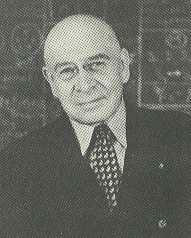
Alfred Korzybski, born on July 3, 1879 in Poland and died on March 1, 1950 in the United States, was a renowned philosopher, writer, and scientist. He is best known for his research on language, thought, and cognition, which had a profound impact on the fields of cognitive science and linguistics. Korzybski's most famous contribution is the 'Korzybski Hypothesis,' which states that human thought is limited by language and symbols. This theory has had a significant influence on the development of cognitive science and linguistics. more
You May Also Like
“Meditation can open the door and welcome all of unfathomably vast goodness in the universe.”
“In order to live, I have to blind myself to my infinitesimal dimensions in this infinite universe.”