Quotessence
Home / Quotes / Quote by Upton Sinclair

Quote by Upton Sinclair

“Was it permitted to believe that there was nowhere upon the earth, or above the earth, a heaven for hogs, where they were requited for all this suffering? Each one of these hogs was a separate creature. Some were white hogs, some were black; some were brown, some were spotted; some were old, some young; some were long and lean, some were monstrous. And each of them had an individuality of his own, a will of his own, a hope and a heart's desire; each was full of self- confidence, of self-importance, and a sense of dignity. And trusting and strong in faith he had gone about his business, the while a black shadow hung over him and a horrid Fate waited in his pathway. Now suddenly it had swooped upon him, and had seized him by the leg. Relentless, remorseless, it was; all his protests, his screams, were nothing to it— it did its cruel will with him, as if his wishes, his feelings, had simply no existence at all; it cut his throat and watched him gasp out his life. And now was one to believe that there was nowhere a god of hogs, to whom this hog personality was precious, to whom these hog squeals and agonies had a meaning? Who would take this hog into his arms and comfort him, reward him for his work well done, and show him the meaning of his sacrifice?”

Quote by Upton Sinclair

Work

The Jungle

This novel provides an in-depth look at the working conditions and exploitation faced by workers in the meatpacking industry during the early 20th century, offering a critical examination of the social and economic issues of the time. more

Author
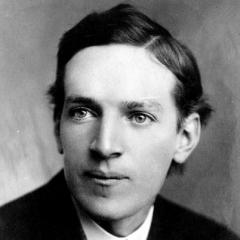
Upton Sinclair
Upton Sinclair

Upton Sinclair was an American author, journalist, and political activist who became one of the most influential social critics of the early 20th century. His 1906 novel "The Jungle," which exposed the horrific conditions of the Chicago meatpacking industry, caused public outrage and directly led to the passage of the Pure Food and Drug Act. Sinclair wrote over 90 books throughout his life and won the Pulitzer Prize for Fiction in 1943 for "Dragon's Teeth." A committed socialist, he ran for governor of California and became a prominent voice for progressive reform in American society. more

You May Also Like

“If we want to live perfectly happy lives...we must drive out selfish character tendencies such as pride, ego, vanity, jealousy, lusts, envy and worry. When we learn to live selflessly, putting others before ourselves, committing to what is noble, right and good; treating others with love and compassion...that's when true happiness is experienced. A genuine focus on selflessness cures all and creates an environment for true growth. It's the secret to every great relationship. We gain...when we give up self. Sacrificing one's selfish characteristics through diligent thought, meditation, prayer and action gives life to true love and abounding joy.~Jason Versey”

“O Captain! my Captain! our fearful trip is done, The ship has weather’d every rack, the prize we sought is won, The port is near, the bells I hear, the people all exulting, While follow eyes the steady keel, the vessel grim and daring; But O heart! heart! heart! O the bleeding drops of red, Where on the deck my Captain lies, Fallen cold and dead. O Captain! my Captain! rise up and hear the bells; Rise up—for you the flag is flung—for you the bugle trills, For you bouquets and ribbon’d wreaths—for you the shores a-crowding, For you they call, the swaying mass, their eager faces turning; Here Captain! dear father! This arm beneath your head! It is some dream that on the deck, You’ve fallen cold and dead. My Captain does not answer, his lips are pale and still, My father does not feel my arm, he has no pulse nor will, The ship is anchor’d safe and sound, its voyage closed and done, From fearful trip the victor ship comes in with object won; Exult O shores, and ring O bells! But I with mournful tread, Walk the deck my Captain lies, Fallen cold and dead.”

“Well, we spent enough on gymnastics.' 'Christ, did we,' said Maureen. 'So many lessons.' So many lessons, it was true: art and music and ice-skating; Lily's every fleeting interest enthusiastically, abundantly indulged. Not to mention the many more practical investments--chemistry tutoring when she struggled, English enrichment when she excelled, SAT courses to propel her to the school and then, presumably, the career of her dreams. What costs had been sunk, what objections had been suppressed, to deliver their daughter into the open and waiting arms of her beautiful life.”

“Rojer!” his mother cried, stumbling towards the washing trough before falling to her knees. Screaming in pain, she reached back and got a firm grip on one of the coreling's horns. “You... can't... have... my... son!” she screamed, and threw herself forward, pulling on the horn with all her strength. Torn from its perch, the demon took ribbons of flesh with it, as Kally flipped it into the trough. Soaking crockery shattered on impact, and the flame demon gurgled and thrashed, steam filling the air as the water was brought to an instant boil. Kally screamed as her arms burned, but she held the creature under until its thrashes stopped.”

“Drizzt looked long and hard at the young woman, tje dedicated warrior, and he understood that Danica, too, had been forced into a great sacrifice because of Cadderly's choice. He sensed an anger within her, but it was buried deep. overwhelmed by her love for this man and her admiration for his sacrifice. Catti-brie didn't miss any of it. She, who had lost her love, surely empathized with Danica, and yet, she knew that the woman was undeserving of any sympathy. In those few sentences of explanation, in the presence of Cadderly and of Danica, and within the halls of this most reverent of structures, Catti-broe understood that to give sympathy to Danica would belittle the sacrifice, would diminish what Cadderly had accomplished in exchange for his years.”