Quotessence
Home / Quotes / Quote by David Foster Wallace

Quote by David Foster Wallace

“Eyes the broad-shouldered faceless character that symbolizes Men’s Room, does Sternberg, and struggles with himself. He’s needed a bowel movement for hours, and since the LordAloft 7:10 lifted things have gotten critical. He tried, back at O’Hare. But he was unable to, because he was afraid to, afraid that Mark, who has the look of someone who never just has to, might enter the rest room and see Sternberg’s shoes under a stall door and know that he, Sternberg, was having a bowel movement in that stall, infer that Sternberg had bowels, and thus organs, and thus a body. Like many Americans of his generation in this awkwardest of post-Imperial decades, an age suspended between exhaustion and replenishment, between input too ordinary to process and input too intense to bear, Sternberg is deeply ambivalent about being embodied; an informing fear that, were he really just an organism, he’d be nothing more than an ism of his organs.”

Quote by David Foster Wallace

Work

Girl With Curious Hair

This book is a compilation of fiction pieces that showcase David Foster Wallace's early literary style, characterized by dense prose, dark humor, and a fascination with the peculiar. The stories often delve into the minds of eccentric characters, examining their interactions with society and each other. The title story, 'Girl With Curious Hair,' is one of several narratives that challenge conventional storytelling through experimental structure and vivid, sometimes unsettling, imagery. more

Author
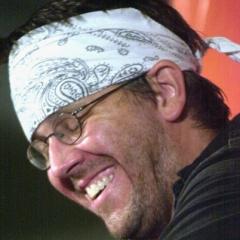
David Foster Wallace

American novelist known for his unique literary style and profound insights into modern life. His works include 'Infinite Jest' and 'The Broom of the System'. more

You May Also Like

“The problem is going to be, "Let's see, I spent all day staring at a computer screen and then at night my most meaningful relationships are with the two-dimensional characters who aren't in fact two-dimensional characters . . . Gee, I wonder why I'm lonely and doing a lot of drugs? Could there be any connection between the fact that I've got nothing to do with other people, that I don't really have a fucking clue what it is to have a real life, and the fact that most of my existence is mediated by entertainment that I passively choose to receive?”

“Nel momento in cui riconosceva quello che c'era su una cartuccia provava la sensazione carica d'ansia che ci fosse qualcosa di meglio su un'altra cartuccia e che potenzialmente se lo stava perdendo. Poi si rese conto che avrebbe avuto tutto il tempo di godersi ogni cartuccia e capì intellettualmente che non aveva senso provare il panico di perdersi qualcosa.”

“Não é significativo que, em inglês, as palavras lobster (lagosta), fish (peixe) e chicken (frango) se refiram tanto ao animal quanto à carne, enquanto a maior parte dos mamíferos exige eufemismos como beef (carne de boi) e pork (carne de porco) para nos ajudar a separar a carne que comemos da criatura viva a quem um dia ela pertenceu? Seria isso uma prova de que existe um desconforto profundo a respeito de comer animais superiores, endêmico o bastante para vir à tona no idioma, mas que diminui à medida que nos afastamos da ordem dos mamíferos? (E seria lamb/lamb (cordeiro/cordeiro) o contraexemplo que empana toda essa teoria, ou existiriam motivos especiais, bíblico-históricos, para tal equivalência?)”

“I bought a house, it's small and brick and next to a horse pasture. It has what seems like a 6-acre lawn, and I bought the house in the winter and it didn't occur to me that the grass in this lawn grows and will have somehow to be dealt with. I haven't mowed a lawn since I folded my childhood lawn-mowing business at 13, and I see all my neighbors mowing their own 6-acre lawns like every fourth day, and Weed-Whacking, and dispersing seed and nitrates through devices that look like enormous flour-sifters on wheels, and I am not keen on becoming a lawn-obsessed homeowner. But it's nice to own a house and not pay off a landlord's mortgage.”

“That's what we've been taught, this is the underpinning of all European culture-this firm belief that there are no secrets that won't sooner or later come to light. Who was it that said it? Jesus? No, Pascal, I think it was… so naïve. But this faith has been nurtured for centuries; it has sprouted its own mythology: the cranes of Ibycus, manuscripts don't burn. An ontological faith in the fundamental knowability of every human deed. The certainty that, as they now teach journalism majors, you can find everything on the Internet. As if the Library of Alexandria never existed. Or the Pogruzhalsky arson, when the whole historical section of the Academy of Sciences' Public Library, more than six-hundred thousand volumes, including the Central Council archives from 1918, went up in flames. That was in the summer of 1964; Mom was pregnant with me already, and almost for an entire month afterward, as she made her way to work at the Lavra, she would get off the trolleybus when it got close to the university and take the subway the rest of the way: above ground, the stench from the site of the fire made her nauseous. Artem said there were early printed volumes and even chronicles in that section-our entire Middle Ages went up in smoke, almost all of the pre-Muscovite era. The arsonist was convicted after a widely publicized trial, and then was sent to work in Moldova's State Archives: the war went on. And we comforted ourselves with "manuscripts don't burn." Oh, but they do burn. And cannot be restored.”

“You get to a place eventually. The advanced reading section in the library of living. A place where they no longer stock the story that you’re looking for in paperback. Only leather bound first editions... with no fancy art on the cover. This is where they keep the books that look like they’re about to fall apart first day off the press. This is where they keep the books that don’t mind waiting in the darkness for someone to understand them. This is where they keep the books your parents tell you not to read. I’ll say it again. This shit isn’t offered in paperback. You’re gonna need a hard cover to write the hard truths. If it doesn’t have a spine, it’s not gonna stand up for itself. You’ll know you’re getting close when the library goes from quiet to silent. You’ll know you’re getting close when every trace of humanity disappears. You’ll know you’re getting close with the titles all sound like the last chapter at the end of the book. They call this section: “These Books Are Ready To Burn.”