Quotessence
Home / Quotes / Quote by Rosemary Sutcliff

Quote by Rosemary Sutcliff

“Sometime about the year 117, the IXth Legion, which was stationed at Eburacum where York now stands, marched north to deal with a rising among the Caledonian tribes and was never heard of again... no-one knows what happened to the IXth Legion after it marched into the northern mists.”

Quote by Rosemary Sutcliff

Work

The Eagle of the Ninth

The story follows a young Roman soldier's quest to recover a lost eagle standard, which is a symbol of his father's unit. The novel combines elements of historical fiction with a coming-of-age narrative, taking readers on a perilous journey through the wilds of Scotland. more

Author
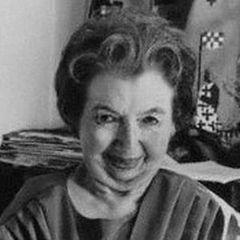
Rosemary Sutcliff
Rosemary Sutcliff

Rosemary Sutcliff was a British historical novelist renowned for her historical fiction, particularly her works set during the Roman period and the Dark Ages. Born on December 14, 1920, and passing away on July 23, 1992, Sutcliff's meticulous research and evocative storytelling have left a lasting impact on the genre. more

You May Also Like

“Trouble in Britain is to be connected with the issue of victory coins in 119 and the fact that by 122 the IXth Legion was replaced at York by the VIth and disappeared from the army list thereafter. That the legion was cashiered, there is no doubt, and it seems evident that this fate, at the hands of the disciplinarian Hadrian, followed an ignominious defeat. But the unit was not anihilated. Some of its officers at least survived and nothing whatever is reported of the circumstances or place of the trouble.”

“A further stroll among the hills brought us to what Scott pronounced the remains of a Roman camp, and as we sat upon a hillock which had once formed part of its ramparts, he pointed out the traces of the lines and bulwarks, and the praetorium, and showed a knowledge of castramentation that would not have disgraced Oldbuck himself. Indeed, various circumstances that I observed about Scott during my visit concurred to persuade me that many of the antiquarian humours of Monkbarns were taken from his own richly compounded character, and that some of the scenes and personages of that admirable novel were furnished by his own neighbourhood.”

“Just between Melrose and Bemersyde is a lovely panorama, taking in an oxbow of the Tweed and a fine aspect of the Eildon Hills, which has become known as 'Scott's View', supposedly because the horses stopped there during the funeral cortege. As we have seen, after his death, Scott is over-written onto the places he described. Scott-land is a palimpsest of Scotland and Scott's works.”

“As we descended the vale of the Gala, he began to gaze about him, and by degrees it was obvious that he was recognising the features of that familiar landscape. Presently he murmered a name or two - 'Gala Water surely - Buckholm - Torwoodlee'. As we rounded the hill at Ladhope, and the outline of the Eildons burst upon him, he became greatly excited, and when turning himself on the couch his eye caught caught at length his own towers, at the distance of a mile, he sprang up with a cry of delight.”

“My chief passion in those years was for the Border countryside, and my object in all my prentice writings was to reproduce its delicate charm, to catch the aroma of its gracious landscape and turbulent history and the idiom of its people. When I was absent from it, I was homesick, my memory was full of it, my happiest days were associated with it, and some effluence from its ageless hills and waters laid a spell upon me which has never been broken. I found in its people what I most admired in human nature – realism coloured by poetry, a stalwart independence sweetened by courtesy, a shrewd kindly wisdom. I asked for nothing better than to spend my life by the Tweed.”

“The Queen of Elfland in the Ballad of Thomas is a huntress, a spirit of the wild, and a queen. were the Romans to have encountered such a figure, worshiped by th pre-Christian Celts who inhabited the Eildons, the proces of interpretatio romana would inevitably have led to her being identified with Diana. If we are to look for evidence in the archaeological record supporting a pre-Christian origin for the Queen of Elfland, we do not have to look far to find it: the spot at which this inscribed Roman stone was uncovered lies less than one kilometre from the Rhymer's Stone, where the Eildon Tree once grew.”