Quotessence
Home / Quotes / Quote by James C. Scott

Quote by James C. Scott

Work

Author

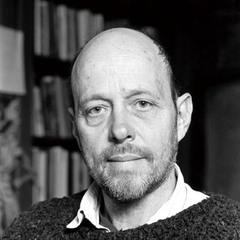
James C. Scott
James C. Scott

James C. Scott is a renowned political scientist, born on December 2, 1936. His research focuses on political power, social theory, and historical analysis, particularly known for his work on peasants, marginalized groups, and informal economies. more

You May Also Like

“La objetividad en el historiador es la inversion de las relaciones entre el querer y el saber y, a la vez, la creencia necesaria en la providencia, en las causas finales y en la teología. El historiador pertenece a los ascetas. "No soporto a estos concupiscentes eunucos de la historia, a todos estos reclutadores del ideal ascético; no soporto a estos sepulcros blanqueados que engendran la vida; no soporto a esos seres fatigados y abúlicos que se arropan con la sabidría y creen tener una mirada objetiva.”

“Once I went professionally to an archaeological expedition- and I learnt something there. In the course of an excavation, when something comes up out of the ground, evEryThing is cleared away very carefully all around it. You take away the loose earth, and you scare here and there with a knife until finally your object is there, all alone, ready to be drawn and photographed with no extraneous matter confusing it. That is what I have been seeking TO do- clear away the extraneous matter so that we can see the truth-the naked shining truth.”

“We are used to things starting out small and simple and then progressing--evolving--to become ever more complex and sophisticated, so this is naturally what we expect to find on archaeological sites. It upsets our carefully structured ideas of how civilizations should behave, how they should mature and develop, when we are confronted by a case like Göbekli Tepe that starts out perfect at the beginning and then slowly devolves until it is just a pale shadow of its former self.”

“Gunung Padang is not a natural hill but a man-made pyramid and the origins of construction here go back long before the end of the last Ice Age. Since the work is massive even at the deepest levels, and bears witness to the kinds of sophisticated construction skills that were deployed to build the pyramids of Egypt, or the largest megalithic sites of Europe, I can only conclude that we're looking at the work of a lost civilization and a fairly advanced one.”

“What would have made [seeing Göbekli Tepe from Harran] easier, in antiquity, would have been a tall tower annexed to the temple that once stood here--a temple dedicated to Su-En (usually contracted to Sin), the Moon God of the Sabians. After telling us that there were "powerful images in this temple," the Greek Philosopher Libanius (AD 314-394), describes the tower, noting that "from its top one could overlook the entire plain of Harran." [...] A team from the Chicago Oriental Institute was about to start a major dig around the ruins of the Grand Mosque in 1986, but it seems that the Turkish authorities insisted on such restrictive practices that the project had to be abandoned. Current excavations by Harran University and the Sanliurfa Museum Directorate show little interest in recovery of substantive remains from the city's pre-Islamic period.”

“As they stepped out onto the bustling boulevard, the glow of the city lights reflected their shared sense of wonder. Paris, with its endless contradictions and eternal allure, was not just their backdrop but their muse, inspiring them to keep asking, keep seeking, and keep dreaming.”

“The fullest account we have of Oannes is found in surviving fragments of the works of a Babylonian priest called Berossos who wrote in the third century BC. [...] Oannes did not do his work alone but was supposedly the leader of a group of beings known as the Seven Apkallu--the "Seven Sages"--who were said to have lived "before the flood" (a cataclysmic global deluge features prominently in many Mesopotamian traditions, including those of Sumer, Akkad, Assyria and Babylon). Alongside Oannes, these sages are portrayed as bringers of civilization who, in the most ancient past, gave humanity a moral code, arts, crafts and agriculture and taught them architectural, building and engineering skills.”

“[At Gunung Padang] First, the drill cores contained evidence--fragments of worked columnar basalt--that more man-made megalithic structures lay far beneath the surface. Secondly, the organic materials brought up in the drill cores began to yield older and older dates--3000 BC to 5000 BC, then 9600 BC as the drills bit deeper, then around 11,000 BC, then 15,000 BC and finally, at depths of 27.5 meters (90 feet) and more, an astonishing sequence of dates of 20,000 BC to 22,000 BC and earlier.”