“At breakfast, and while they were packing the few remaining articles, he showed his weariness from the night's effort so unmistakably that Tess was on the point of revealing all that had happened; but the reflection that it would anger him, grieve him, stultify him, to know that he had instinctively manifested a fondness for her of which his common sense did not approve, that his inclination had comrpromised his dignity when reason slept, again deterred her. It was too much like laughing at a man when sober for his erratic deeds during intoxication. It just crossed her mind, too, that he might have a faint recollection of his tender vagary and was disinclined to allude to it from a conviction that she would take amatory advantage of the opportunity it gave her of appealing to him anew not to go. ...When Tess had passed over the crest of the hill he turned to go his own way, and hardly knew that he loved her still.”
Quote by Thomas Hardy
Work
This nineteenth-century novel centers on Tess Durbeyfield, a rural peasant girl whose father learns of distant aristocratic ancestry. Sent to claim kinship with the wealthy D'Urberville family, Tess encounters Alec D'Urberville, whose actions set in motion a chain of events that shadow her subsequent life. Later working as a milkmaid, she forms a relationship with Angel Clare, a man of progressive ideals whose response to her past reveals the gap between principle and practice. The narrative traces Tess's movement through agricultural labor, social stigma, and shifting moral landscapes, examining how individual character intersects with circumstance, class hierarchy, and gendered double standards. Hardy's subtitle, "A Pure Woman Faithfully Presented," signals his authorial stance toward his protagonist, framing the work as social critique as much as personal tragedy. The novel belongs to the pastoral tradition while subverting its conventions, and it contributed to debates about sexual morality, religious doubt, and the representation of working-class experience in literature. more
Author
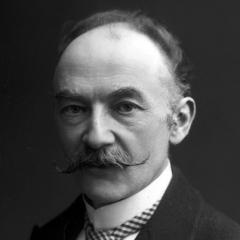
Thomas Hardy, a British novelist born on June 2, 1840, and died on January 11, 1928, is renowned for his novels that depict rural life, reflecting the social changes in 19th-century England. His works often carry a sense of pessimism, depicting the fates of characters with sympathy. more
You May Also Like
“«Deja de pensar en cosas duras», me reprendí. Mantuve la vista alta, solo para evitar tentaciones.”
“True love sees beyond the enchantment, yet does not become disenchanted.”
“True love is independent of your needs. True love has no conditions.”