Quotessence
Home / Quotes / Quote by Laurell K. Hamilton

Quote by Laurell K. Hamilton

“Orospu çocuğu kan emicilerle çıkmaya başladığından beri bana hiç bir konuda tüm gerçeği anlattığına inanmıyorum Anita' 'Politik olarak doğrusunu söylemek gerekirse,senin o orospu çocuğu kan emici dediğin vampir, ST Louis'nin Şehir Efendisi Dolp' 'O seninde efendinmi Anita?' 'Ne?' 'Şehir Efendisinin insan hizmetkarımısın?”

Quote by Laurell K. Hamilton

Work

Danse Macabre

An in-depth analysis of the horror genre, examining its origins, themes, and impact on culture. more

Author

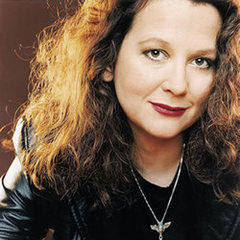
Laurell K. Hamilton
Laurell K. Hamilton

Laurell K. Hamilton is an American author renowned for her best-selling novel series 'Harry Potter'. Born on February 19, 1963, she is a prolific writer whose works span a variety of literary genres including fantasy, horror, and romance. more

You May Also Like

“In her fantastic mood she stretched her soft, clasped hands upward toward the moon. 'Sweet moon,' she said in a kind of mock prayer, 'make your white light come down in music into my dancing-room here, and I will dance most deliciously for you to see". She flung her head backward and let her hands fall; her eyes were half closed, and her mouth was a kissing mouth. 'Ah! sweet moon,' she whispered, 'do this for me, and I will be your slave; I will be what you will.' Quite suddenly the air was filled with the sound of a grand invisible orchestra. Viola did not stop to wonder. To the music of a slow saraband she swayed and postured. In the music there was the regular beat of small drums and a perpetual drone. The air seemed to be filled with the perfume of some bitter spice. Viola could fancy almost that she saw a smoldering campfire and heard far off the roar of some desolate wild beast. She let her long hair fall, raising the heavy strands of it in either hand as she moved slowly to the laden music. Slowly her body swayed with drowsy grace, slowly her satin shoes slid over the silver sand. The music ceased with a clash of cymbals. Viola rubbed her eyes. She fastened her hair up carefully again. Suddenly she looked up, almost imperiously. "Music! more music!" she cried. Once more the music came. This time it was a dance of caprice, pelting along over the violin-strings, leaping, laughing, wanton. Again an illusion seemed to cross her eyes. An old king was watching her, a king with the sordid history of the exhaustion of pleasure written on his flaccid face. A hook-nosed courtier by his side settled the ruffles at his wrists and mumbled, 'Ravissant! Quel malheur que la vieillesse!' It was a strange illusion. Faster and faster she sped to the music, stepping, spinning, pirouetting; the dance was light as thistle-down, fierce as fire, smooth as a rapid stream. The moment that the music ceased Viola became horribly afraid. She turned and fled away from the moonlit space, through the trees, down the dark alleys of the maze, not heeding in the least which turn she took, and yet she found herself soon at the outside iron gate. ("The Moon Slave")”

“As the sun began to rise, the man reached out to the woman, and they clasped hands. He cradled her, and languidly they lifted themselves up to their feet, their bodies brushing, their eyes lost in each other's. Sensuously, deliberately, they danced, moving as though they were one, their body language smooth as their limbs carefully unfolded. They twirled and rocked, intertwined and separated, nearly leaning onto one another but barely touching, their movements sometimes tender, sometimes almost violent...Moments passed while the dancers held tight to each other, as though their bodies were melting together. The expression on their features as they lifted their faces to the sky was one of unimaginable joy.”

“The months passed away. Slowly a great fear came over Viola, a fear that would hardly ever leave her. For every month at the full moon, whether she would or no, she found herself driven to the maze, through its mysterious walks into that strange dancing-room. And when she was there the music began once more, and once more she danced most deliciously for the moon to see. The second time that this happened she had merely thought that it was a recurrence of her own whim, and that the music was but a trick that the imagination had chosen to repeat. The third time frightened her, and she knew that the force that sways the tides had strange power over her. The fear grew as the year fell, for each month the music went on for a longer time - each month some of the pleasure had gone from the dance. On bitter nights in winter the moon called her and she came, when the breath was vapor, and the trees that circled her dancing-room were black, bare skeletons, and the frost was cruel. She dared not tell anyone, and yet it was with difficulty that she kept her secret. Somehow chance seemed to favor her, and she always found a way to return from her midnight dance to her own room without being observed. Each month the summons seemed to be more imperious and urgent. Once when she was alone on her knees before the lighted altar in the private chapel of the palace she suddenly felt that the words of the familiar Latin prayer had gone from her memory. She rose to her feet, she sobbed bitterly, but the call had come and she could not resist it. She passed out of the chapel and down the palace gardens. How madly she danced that night! ("The Moon Slave")”

“All I know is that the fear I have been battling all night is breaking down the door of my ignorance. As my feet slam down I feel not the hard, wet asphalt but the soft Persian rug that led to the staircase in my father’s home. In the glow of lightning the dancing trees are illuminated but I see my mother in the glow of candlelight, spinning, twirling, her hair fanned out behind her. It is falling over me, saturating my thoughts, and I cannot. I cannot let it in.”