Quotessence
Home / Quotes / Quote by Maggie Stiefvater

Quote by Maggie Stiefvater

“The fragment was pure white, the edges blunt and worn. "That's what makes the raven. Like they use for roads down in the tidewater area. Oyster shells on bare rock...”

Quote by Maggie Stiefvater

Work

The Raven Boys

In this novel, a young woman's life takes an unexpected turn when she encounters a group of boys who are the descendants of a family with a history of supernatural abilities. As she becomes more involved with these boys, she discovers that her own life is inextricably linked to their fate, leading her into a world of magic, danger, and ancient prophecies. more
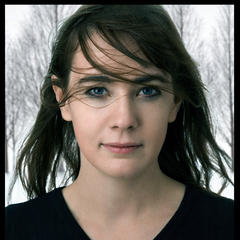
Author

Maggie Stiefvater
Maggie Stiefvater

Maggie Stiefvater is an American author known for her young adult novels. Her most famous works include 'The Scorpio Races' and 'The Raven Cycle'. Stiefvater's writing is celebrated for its unique narrative style and deep portrayal of the natural environment. more

You May Also Like

“Ritual Version —for Kate Middleton humself, shamself, hymnself, shameself—. lameself, lambself, numbself, unself—. sing anger, goddess, of—. many devices—. sing anger godless—. tell me who—. sacred in the sea suffered so many woes—. bookshelf, doubtshelf, debtshelf, riftshelf—. driftshelf, truthshelf, foolshelf, rueshelf—. sing less the many souls sent—. they perished—. sing spoils for the dogs—. who swallowed down the foolish song—. the soul and its companions—. nounself, nonceself, nonself, lashself—. ashself, lawself, thoughtself, aughtself—. tell me, muse, from any point—. and birds—. sing less the wrath of—. a man’s cleverness—. tell also us—. of recklessness—. of home—.”

“Certainly, I believe that wilderness experiences are both restorative and essential on many levels. I am constantly contriving to get myself and my family out of the city to go hiking or camping in forests, mountains, and meadows in our Pacific Northwest home and beyond. But in making such experiences the core of our "connection to nature," we set up a chasm between our daily lives ("non-nature") and wilder places ("true nature"), even though it is in our everyday lives, in our everyday homes, that we eat, consume energy, run the faucet, compost, flush, learn, and live. It is here, in our lives, that we must come to know our essential connection to the wilder earth, because it is here, in the activity of our daily lives, that we most surely affect this earth, for good or for ill.”

“He had hundreds of monsters inside him wearing his face as a mask. Screaming and trying to tear him apart and take his place. He always fought furiously to hold them back and it created an unending chaos inside him. Eventually, in the end, he lost all his strength and battles. He was dragged down into the abyss. He cried and fought hard to find his way back home. To get out from there again and to be himself. But among all these masks, the real he was lost forever. He never made it back again, and he was not himself anymore.”