Quotessence
Home / Quotes / Quote by Michel Faber

Quote by Michel Faber

Work

The Crimson Petal and the White

Browse quotes and source details for this work. more

Author
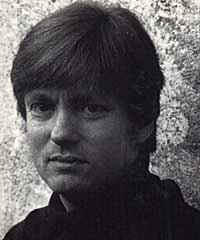
Michel Faber
Michel Faber

Michel Faber is a British writer known for his unique literary style and profound thematic explorations. His works span various genres, including novels, poetry, and plays. Faber's representative work, 'The Book of Strange New Things', is a science fiction novel that delves into religious faith, human exploration, and the mysteries of the universe. more

You May Also Like

“¿Cuál es el principal efecto del sentimiento de Envidia? El deseo de despreciar, devaluar, al envidiado. Se intenta quitarle condición de hazaña a sus hazañas. Al devaluar al envidiado, el envidioso logra dejar de sufrir la envidia, y por eso trata de argumentar, pensar, y denostar la hazaña del otro para tratar de quitarle brillo. A medida que le quita esplendor, disminuye su sufrimiento. Es decir: contrariamente a lo que el sentido común indica, el principal efecto de la Envidia no es “Destruir” sino “Despreciar”.”

“No, not of course at all—it is really all hocus-pocus. The days lengthen in the winter-time, and when the longest comes, the twenty-first of June, the beginning of summer, they begin to go downhill again, toward winter. You call that ‘of course’; but if one once loses hold of the fact that it is of course, it is quite frightening, you feel like hanging on to something. It seems like a practical joke—that spring begins at the beginning of winter, and autumn at the beginning of summer. You feel you’re being fooled, led about in a circle, with your eye fixed on something that turns out to be a moving point. A moving point in a circle. For the circle consists of nothing but such transitional points without any extent whatever; the curvature is incommensurable, there is no duration of motion, and eternity turns out to be not ‘straight ahead’ but ‘merry-go-round’!”

“Nada es más fácil para la gente vulgar de inteligencia limitada que suponerse excepcionales y originales y vivir en esta ilusión sin el más leve desengaño. A algunas señoritas rusas les basta cortarse el cabello, ponerse gafas azules y calificarse de nihilistas para suponer, en el acto, que han adquirido «convicciones» propias. A ciertos hombres les basta percibir en su alma el más tenue rayo de amabilidad hacia sus semejantes y de emoción para persuadirse definitivamente de que nadie siente como ellos y resultan la vanguardia en el desarrollo de la humanidad. A algunos les basta oír alguna idea ajena o leer una página determinada para convencerse de que lo oído o leído es su propia opinión, espontáneamente brotada de su cerebro. La insolencia de esta ingenuidad, si cabe expresarse así, es sorprendente en casos de este orden, y por increíble que parezca, tales casos se encuentran muy a menudo.”