Quotessence
Home / Quotes / Quote by Wally Lamb

Quote by Wally Lamb

“We are like water, aren’t we? We can be fluid, flexible when we have to be. But strong and destructive, too.” And something else, I think to myself. Like water, we mostly follow the path of least resistance.”

Quote by Wally Lamb

Work

We Are Water

Browse quotes and source details for this work. more
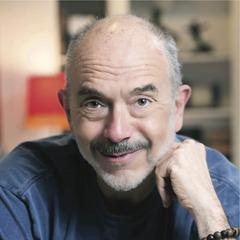
Author

Wally Lamb
Wally Lamb

Wally Lamb is an American author known for his profound psychological portrayals and complex character development. His works often explore themes such as family, love, faith, and identity, and are highly appreciated by readers. more

You May Also Like

“One saw a bird dying, shot by a man. It was flying with rhythmic beat and beautifully, with such freedom and lack of fear. And the gun shattered it; it fell to the earth and all the life had gone out of it. A dog fetched it, and the man collected other dead birds. He was chattering with his friend and seemed so utterly indifferent. All that he was concerned with was bringing down so many birds, and it was over as far as he was concerned. They are killing all over the world. Those marvellous, great animals of the sea, the whales, are killed by the million, and the tiger and so many other animals are now becoming endangered species. Man is the only animal that is to be dreaded.”

“For Mercy has a human heart; Pity, a human face; And Love, the human form divine: And Peace the human dress. Songs of Innocence Cruelty has a human heart And jealousy a human face, Terror the human form divine, And secrecy the human dress. The human dress is forged iron, The human form a fiery forge, The human face a furnace seal'd, The human heart its hungry gorge.”

“The twins were too young to know that these were only history’s henchmen. Sent to square the books and collect the dues from those who broke its laws. Impelled by feelings that were primal yet paradoxically wholly impersonal. Feelings of contempt born of inchoate, unacknowledged fear—civilization’s fear of nature, men’s fear of women, power’s fear of powerlessness. Man’s subliminal urge to destroy what he could neither subdue nor deify.”

“And it was not merely tens of thousands, or hundreds of thousands, but hundreds of millions of people who were the obedient witnesses of this slaughter of the innocent. Nor were they merely obedient witnesses: when ordered to, they gave their support to this slaughter, voting in favour of it amid a hubbub of voices. There was something unexpected in their degree of obedience... The extreme violence of the totalitarian social systems proved able to paralyse the human spirit throughout whole continents.”

“Every adult life could be said to be defined by two great love stories. The first - the story of our quest for sexual love - is well known and well charted, its vagaries form the staple of music and literature, it is socially accepted and celebrated. The second - the story of our quest for love from the world - is a more secret and shameful tale. If mentioned, it tends to be in caustic, mocking terms, as something of interest chiefly to envious or deficient souls, or else the drive for status is interpreted in an economic sense alone. And yet this second love story is no less intense than the first, it is no less complicated, important or universal, and its setbacks are no less painful. There is heartbreak here too.”

“Man has no automatic code of survival. His particular distinction from all other living species is the necessity to act in the face of alternatives by means of volitional choice. He has no automatic knowledge of what is good for him or evil, what values his life depends on, what course of action it requires. Are you prattling about an instinct of self-preservation? An instinct of self-preservation is precisely what man does not possess. An 'instinct' in as unerring and automatic form of knowledge. A desire is not an instinct. A desire to live does not give you the knowledge required for living. And even man's desire to live is not automatic: your secret evil today is that that is the desire you do not hold. Your fear of death is not a love of life and will not give you the knowledge needed to keep it. Man must obtain his knowledge and choose his actions by a process of thinking, which nature will not force him to perform. Man has the power to act as his own destroyer--and that is the way he has acted through most of history.”

“Were we to confront our creaturehood squarely, how would we propose to educate? The answer, I think is implied in the root of the word education, educe, which means "to draw out." What needs to be drawn out is our affinity for life. That affinity needs opportunities to grow and flourish, it needs to be validated, it needs to be instructed and disciplined, and it needs to be harnessed to the goal of building humane and sustainable societies. Education that builds on our affinity for life would lead to a kind of awakening of possibilities and potentials that lie dormant and unused in the industrial-utilitarian mind. Therefore the task of education, as Dave Forman stated, is to help us 'open our souls to love this glorious, luxuriant, animated, planet.' The good news is that our own nature will help us in the process if we let it.”