“Got orders from headquarters. They makin' coffins fuh all de white folks. 'Tain't nothin' but cheap pine, but dat's better'n nothin'. Don't dump no white folks in de hole jus' so." "Whut tuh do 'bout de colored folks? Got boxes fuh dem too? “Nope. They cain't find enough of 'em tuh go 'round. Jus' sprinkle plenty quick-lime over 'em and cover 'em up." "Shucks! Nobody can't tell nothin' 'bout some uh dese bodies, de shape dey's in. Can't tell whether dey's white or black." The guards had a long conference over that. After a while they came back and told the men, "Look at they hair, when you cain't tell no other way. And don't lemme ketch none uh y'all dumpin' white folks, and don't be wastin' no boxes on colored. They's too hard tuh git holt of right now." "They's mighty particular how dese dead folks goes tuh judgment," Tea Cake observed to the man working next to him. "Look lak dey think God don't know nothin' 'bout de Jim Crow law.”
Quote by Zora Neale Hurston
Work
This novel follows the life of Janie Crawford, a woman who seeks independence and self-fulfillment in a society that limits her options. It delves into themes of identity, love, and the search for personal freedom. more
Author
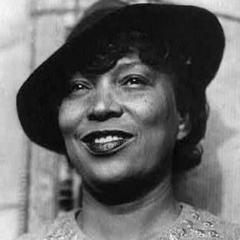
Zora Neale Hurston (1891-1960) was an American anthropologist, folklorist, and novelist who played a pivotal role in the Harlem Renaissance. Born in Alabama and raised in Eatonville, Florida, she became the first African American student at Barnard College, Columbia University, studying under Franz Boas. Hurston is best known for her novel "Their Eyes Were Watching God," now considered a classic of American literature. She conducted extensive anthropological fieldwork in the American South and Caribbean, preserving African American folk traditions. Though largely forgotten after her death, her work was revived by Alice Walker in the 1970s, establishing her as a foundational figure in African American literature and anthropology. more
You May Also Like
“You need a good customer service and client success strategy because it helps your business grow.”
“I love to be a graphic designer, but could we get rid of clients somehow please?”