Quotessence
Home / Quotes / Quote by Simon Blackburn

Quote by Simon Blackburn

“It is the thought that the least efficient way of of finding either happiness or pleasure is to pursue them. Put in terms of happiness, we can see it like this: To be happy you must quite literally "lose yourself". You must lose yourself in some pursuit; you need to forget your own happiness and find other goals and projects, other objects of concern that might include the welfare of some other people, or the cure of the disease, or simply in the variety of everyday activities with their little successes and setbacks.”

Quote by Simon Blackburn

Work

Mirror, Mirror: The Uses and Abuses of Self-Love

This book delves into the complexities of self-love, discussing its role in fostering self-esteem and well-being, while also addressing the dangers of excessive self-regard and narcissism. It explores how individuals can cultivate a healthy balance between self-compassion and self-improvement, and its impact on interpersonal dynamics. more

Author
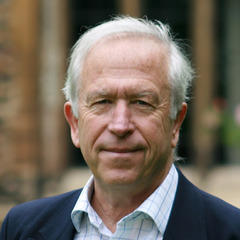
Simon Blackburn
Simon Blackburn

Simon Blackburn is a renowned British philosopher known for his contributions to ethics and philosophy of language. His research spans across various fields including moral philosophy, logic, philosophy of language, and philosophy of religion. Blackburn's works are extensive, including analyses of moral intuition, the meaning of language, and philosophical arguments. more

You May Also Like

“Even connoisseurship can have politics, Slow Food wagers, since an eater in closer touch with his senses will find less pleasure in a box of Chicken McNuggets than in a pastured chicken or a rare breed of pig. It's all very Italian (and decidedly un-American) to insist that doing the right thing is the most pleasurable thing, and that the act of consumption might be an act of addition rather than subtraction.”

“When he [Malevranche] happened to find Descartes' book entitled Man in a book shop on the rue Saint Jaques, he leafed through it, bought it and "read it with so much pleasure that he was forced at times to interrupt his reading, so loud were the beatings of his heart due to the extreme pleasure he had in doing so". Those who never put down a book of erudition, science or philosophy, to catch their breath, so to speak, and recover from the strong emotion they experience, certainly ignore of of the most exquisite pleasures of intellectual life.”

“Il existe depuis très longtemps une immense secte d'imbéciles qui opposent sensualité et intelligence. C'est un cercle vicieux : ils se privent de volupté pour exalter leurs capacités intellectuelles, ce qui a pour résultat de les appauvrir. Ils deviennent de plus en plus stupides, ce qui les conforte dans leur conviction d'être brillants - car on n'a rien inventé de mieux que la bêtise pour se croire intelligent. La délectation rend humble et admiratif envers ce qui l'a rendue possible, le plaisir éveille l'esprit et le pousse tant à la virtuosité qu'à la profondeur. C'est une si puissante magie qu'à défaut de volupté, l'idée de volupté suffit. Du moment qu'existe cette notion, l'être est sauvé. Mais la frigidité triomphante se condamne à la célébration de son propre néant. On rencontre dans les salons des gens qui se vantent haut et fort de s'être privés de tel ou tel délice pendant vingt-cinq ans. On rencontre aussi de superbes idiots qui se glorifient de ne jamais écouter de musique, de ne jamais ouvrir un livre ou de ne jamais aller au cinéma. Il y a aussi ceux qui espèrent susciter l'admiration par leur chasteté absolue. Il faut bien qu'ils en tirent vanité : c'est le seul contentement qu'ils auront dans leur vie.”

“Nature has placed mankind under the governance of two sovereign masters, pain and pleasure. It is for them alone to point out what we ought to do, as well as to determine what we shall do. On the one hand the standard of right and wrong, on the other the chain of causes and effects, are fastened to their throne. They govern us in all we do, in all we say, in all we think: every effort we can make to throw off our subjection, will serve but to demonstrate and confirm it. In words a man may pretend to abjure their empire: but in reality he will remain subject to it all the while. The principle of utility recognizes this subjection, and assumes it for the foundation of that system, the object of which is to rear the fabric of felicity by the hands of reason and of law. Systems which attempt to question it, deal in sounds instead of sense, in caprice instead of reason, in darkness instead of light.”

“Once you are defiled, you can't get back your purity by any means, instead, you will only look for ways to be defiled over and over again.”