Quotessence
Home / Quotes / Quote by Erich Fromm

Quote by Erich Fromm

“Jestliže má humanistické náboženství teistické jádro, Bůh je symbolem moci člověka, schopností, které se člověk snaží v životě uskutečnit - není to sym­bol síly a ovládání, symbol moci nad člověkem.”

Quote by Erich Fromm

Work

Psychoanalysis and Religion

This book delves into the complex relationship between psychoanalysis and religion, analyzing the ways in which psychological theories and religious thought intersect and interact. It explores the impact of religious beliefs on psychological development and the influence of psychoanalytic concepts on religious interpretation. The text provides an in-depth look at the theoretical frameworks and case studies that illustrate this interplay, offering readers a comprehensive understanding of the subject. more

Author
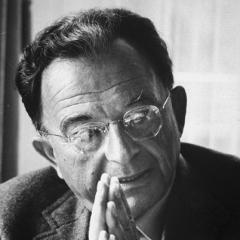
Erich Fromm
Erich Fromm

Erich Fromm, born on March 23, 1900 in Germany and died on March 18, 1980, was a renowned psychologist. His research covered a wide range of fields including anthropology, philosophy, and religion, particularly known for his studies on human psychology and interpersonal relationships. more

You May Also Like

“Zabýváme se ještě problémem modlářství my? Jedině když zjistíme, že nějací „primitivové" uctívají ka­menné a dřevěné modly. Jsme přesvědčeni, že my sami jsme něco takového dávno překonali, poněvadž nevidíme ve společnosti uctívání žádných tradičních symbolů modlářství. Zapomínáme, že podstatou modlářství není uctívání té či oné modly, ale že jde o specifický lidský postoj. Tento přístup lze popsat jako zbožštění věcí či částečných aspektů světa a pod­řizování se takovým věcem. Opakem je přístup, kdy věnujeme život uskutečnění nejvyšších principů lid­ské existence, lásce a rozumu, abychom se stali tím, kým potenciálně jsme, bytostí stvořenou k podobě Boží. Modly nejsou pouze sochy z kamene či dřeva. Slova se mohou stát modlou a stroje se mohou stát modlou. Také vůdci, stát, moc a politické skupiny se jí mohou stát. Věda a názor druhého člověka se mo­hou stát modlou a pro řadu lidí se stal modlou Bůh.”

“Если бы человек был безгранично податлив, тогда, действительно, нормы и институты, неблагоприятные для человеческого благополучия, имели бы возможность заковать человека навсегда в свои системы, лишив человеческую природу возможности мобилизовать свои внутренние силы и направить их на изменение этих систем. Человек был бы только марионеткой социальных порядков, а не – как он доказал это исторически – активным деятелем, чьи внутренние силы энергично противодействуют мощному давлению неблагоприятных социальных и культурных систем. В самом деле, если б человек был лишь творением культурных систем, невозможно было бы критиковать или оценить ни один социальный строй с точки зрения человеческого благополучия, поскольку здесь не было бы места понятию «человек».”

“Человек может адаптироваться к рабству, но он реагирует на него снижением своих интеллектуальных и моральных качеств; он может адаптироваться к культуре, проникнутой всеобщим недоверием и враждебностью, но он реагирует па такую адаптацию ослаблением своих сил и бесплодностью. Человек может адаптироваться к культурным условиям, требующим подавления сексуальных влечений, но при такой адаптации, как показал Фрейд, у него развиваются невротические симптомы. Человек может адаптироваться почти к любой культурной системе, но в той мере, в какой эти системы противоречат его природе, у него развиваются ментальные и эмоциональные нарушения, принуждающие его, в конце концов, к изменению этих условий, так как он не может изменить свою природу.”

“Человек – не чистый лист бумаги, на котором культура может писать свой текст; он – существо, заряженное энергией и структурированное определенным образом, существо, которое, адаптируясь, реагирует специфическим и установленным образом на внешние условия. Если бы человек адаптировался к внешним условиям, гибко изменяя свою природу, подобно животному, и был способен к жизни только при определенных условиях, к которым он развил специальную адаптацию, он достиг бы тупика специализации, которая является судьбой всякого животного вида, а значит, и прекращения истории. Если бы, с другой стороны, человек мог адаптироваться ко всем условиям, не сопротивляясь тем, которые противны его природе, он никогда не имел бы никакой истории вообще. Человеческая эволюция обусловлена человеческой адаптируемостью и определенными неразрушимыми свойствами природы человека, которые заставляют его никогда не прекращать поиск условий, более соответствующих его внутренним потребностям.”

“Что же касается релятивизма, то Дьюи утверждает следующее: тот факт, что нечто вызывает удовольствие, еще не заключает в себе «суждения о ценности того, что вызывает удовольствие». Удовольствие – первичное данное, но оно должно быть «верифицировано очевидными фактами». Подобно Спинозе, он утверждает, что к объективно значимым ценностным высказываниям можно прийти, руководствуясь разумом; для него, как и для Спинозы, цель человеческой жизни – рост и развитие человека, определяемые в терминах его природы.”

“Однако думается, что в нашем случае неверно было бы утверждать, будто «мы не знаем, какова наша действительная цель, пока не выработаем плана действий»[20]. Цели можно установить путем эмпирического анализа человека как целостного феномена, даже если мы еще не знаем средств для их достижения. Относительно некоторых целей уже теперь можно выдвинуть обоснованные утверждения, хотя в настоящий момент у них еще нет, так сказать, ни рук, ни ног. Наука о человеке может дать нам такую картину «модели человеческой природы», из которой можно вывести цели прежде, чем будут найдены средства для их достижения.”

“All men fear death. It’s a natural fear that consumes us all. We fear death because we feel that we haven’t loved well enough or loved at all, which ultimately are one and the same. However, when you make love with a truly great woman, one that deserves the utmost respect in this world and one that makes you feel truly powerful, that fear of death completely disappears. Because when you are sharing your body and heart with a great woman the world fades away. You two are the only ones in the entire universe. You conquer what most lesser men have never conquered before, you have conquered a great woman’s heart, the most vulnerable thing she can offer to another. Death no longer lingers in the mind. Fear no longer clouds your heart. Only passion for living, and for loving, become your sole reality. This is no easy task for it takes insurmountable courage. But remember this, for that moment when you are making love with a woman of true greatness you will feel immortal. I believe that love that is true and real creates a respite from death. All cowardice comes from not loving or not loving well, which is the same thing. And when the man who is brave and true looks death squarely in the face like some rhino hunters I know or Belmonte, who is truly brave, it is because they love with sufficient passion to push death out of their minds. Until it returns, as it does to all men. And then you must make really good love again. Think about it.”

“With so many trees in the city, you could see the spring coming each day until a night of warm wind would bring it suddenly in one morning. Sometimes the heavy cold rains would beat it back so that it would seem that it would never come and that you were losing a season out of your life. This was the only truly sad time in Paris because it was unnatural. You expected to be sad in the fall. Part of you died each year when the leaves fell from the trees and their branches were bare against the wind and the cold, wintry light. But you knew there would always be the spring, as you knew the river would flow again after it was frozen. When the cold rains kept on and killed the spring, it was as though a young person had died for no reason. In those days, though, the spring always came finally but it was frightening that it had nearly failed.”

“He remembered the time he had hooked one of a pair of marlin. The male fish always let the female fish feed first and the hooked fish, the female, made a wild, panic-stricken, despairing fight that soon exhausted her, and all the time the male had stayed with her, crossing the line and circling with her on the surface. He had stayed so close that the old man was afraid he would cut the line with his tail which was sharp as a scythe and almost of that size and shape. When the old man had gaffed her and clubbed her, holding the rapier bill with its sandpaper edge and clubbing her across the top of her head until her colour turned to a colour almost like the backing of mirrors, and then, with the boy’s aid, hoisted her aboard, the male fish had stayed by the side of the boat. Then, while the old man was clearing the lines and preparing the harpoon, the male fish jumped high into the air beside the boat to see where the female was and then went down deep, his lavender wings, that were his pectoral fins, spread wide and all his wide lavender stripes showing. He was beautiful, the old man remembered, and he had stayed.”